If you’ve ever struggled to kick-start a vintage motorcycle—wincing through the spinning of the engine, then feeling that perfect pop of the ignition—there’s a quiet hero working under your bike’s side panel: the digital CDI. For years, as a supplier of these critical ignition components, I’ve gotten questions from fellow mechanics, small-batch bike builders, and weekend riders: How does a digital CDI actually work when paired with a kick-start system? It’s a combination that’s more intentional than it might seem, blending old-school kick-start reliability with modern precision that cuts down on misfires and keeps engines running smooth, even when you’re cranking the engine with nothing but your boot. Motorcycle Digital CDI
Let’s start with the basics of a kick-start system, because you can’t understand the digital CDI’s role without grounding yourself in how your bike powers itself to start. On a kick-start motorcycle, there’s no battery to crank the engine (at least, not on most older or budget models, and that’s the exact setup where digital CDIs shine). When you push the kick starter down, you spin the engine’s crankshaft, which turns a magnet on the flywheel. That magnet passes by a copper pickup coil—this is your “sensor” for the entire ignition sequence. Back in the day, analog CDIs relied on this pickup’s voltage output alone: if you kicked too slow, the magnet didn’t spin fast enough, so the pickup couldn’t generate enough power to trigger the spark. Too fast, and the timing would be off, leading to a sputter or no start at all.
Digital CDIs fix that gap by adding a tiny, smart circuit board between the pickup coil and the spark plug. Unlike analog units, which just passed voltage through a mechanical switch, digital CDIs use a microprocessor to process the pickup coil’s signal before sending power to the ignition coil. That’s the key difference when you’re dealing with a kick-start: the microprocessor can adjust the timing of the spark based on how fast you’re kicking, which means even a slow, hesitant kick will generate a properly timed spark, instead of leaving you stranded with a weak one.
Let’s break down the step-by-step process, starting the second your boot hits the kick starter. First, the kick axle turns, spinning the crankshaft, which is connected directly to the flywheel. The flywheel has a permanent magnet attached to its inner edge, positioned so it passes very close to the ignition pickup coil—a small, stationary coil mounted to the engine’s stator. As the magnet spins past the pickup, it induces a tiny alternating current (AC) voltage, usually between 1 and 5 volts, depending on crank speed. This is the raw signal from the kick-start motion; analog CDIs would take this at face value. But the digital CDI’s first job is to convert this weak AC signal into a direct current (DC) signal that the microprocessor can read. That’s done with a simple rectifier circuit built into the CDI unit, which smooths out the alternating current and filters out any noise from the engine’s moving parts.
Next comes the timing adjustment, the part that makes digital CDIs so much better for kick-start bikes. The microprocessor on the CDI’s board is programmed to recognize two key data points: how fast the crank is spinning (from the pickup’s voltage strength) and the exact position of the crank (from a timing mark sensor, often built right into the same pickup coil or a separate small sensor on the engine block). When you kick, the crank spins at a variable speed—say, 50 RPM for a slow, stiff kick, up to 200 RPM for a crisp, fast one. The digital CDI doesn’t trigger the spark the second the crank is at the right position; it calculates the ideal spark advance for that exact RPM. For kick-start engines, that means a slightly retarded spark at very low RPM (so the spark doesn’t fire too early and cause a kickback, which can hurt your leg) and a more advanced spark as the crank speeds up (for better combustion and easier starting).
Once the microprocessor confirms that both speed and position are within the safe range for a kick-start, it sends a signal to the CDI’s main capacitor. This is the energy storage unit of the CDI: it charges up using power from the same pickup coil, a process called “inductive charging.” On analog CDIs, this charging is tied directly to the pickup’s voltage, so if you kicked too slow, the capacitor would never charge enough to make a spark. Digital CDIs fix this with a charge controller circuit, which acts like a tiny power manager. Even if the pickup only generates a small voltage from a slow kick, the charge controller draws from that small current to slowly build up the capacitor’s charge—sometimes over multiple kick-strokes, if you need them—until it hits the 200 to 400 volts needed to create a spark across the spark plug gap. That’s why you can sometimes kick a bike twice, instead of three or four times, because the CDI is building that charge each time.
The final step is the spark delivery. When the capacitor is fully charged and the timing is perfect, the microprocessor triggers a thyristor—a solid-state switch, way more reliable than the mechanical points in old ignition systems. The thyristor lets the capacitor’s stored energy dump into the ignition coil, which is a step-up transformer. The ignition coil takes the low-voltage current from the capacitor (around 300V) and steps it up to 20,000 to 50,000 volts—high enough to jump the small gap between the spark plug’s electrodes, even if the plug is a little worn or has carbon buildup. That’s the spark that ignites the fuel-air mixture in the cylinder, and if the timing and charge are just right, your bike roars to life on the first kick.
Now, you might be wondering: why not just use a regular digital CDI, the kind for battery-powered bikes, on a kick-start setup? The answer is in the power source. Battery-powered digital CDIs draw their charge from the bike’s 12V battery, which is constant and strong. Kick-start digital CDIs can’t rely on a battery—most kick-start bikes don’t have one, or have a tiny battery only for lights, not for ignition. So the CDI has to be optimized to run on the low, variable voltage from the pickup coil, not a steady 12V. That’s a big part of what we design as a supplier: customizing the microprocessor code and charge controller to work with the specific RPM range of common kick-start engines, from 100cc vintage dirt bikes to 500cc dual-sport models. We also make sure the unit is rugged enough to handle the vibration of being bolted to the engine, and the occasional water splash, since kick-start bikes are often used for off-road riding.
There are a few common myths about digital CDIs and kick-start systems, too. Some riders think digital CDIs are only for high-performance bikes, but that’s not true—they work equally well on budget models because they eliminate the problem of misfires from inconsistent kick speed. Another myth is that digital CDIs make kick-starting too easy, taking away the “feel” of the old analog systems. In reality, the precision of the digital CDI makes the feel more consistent: you don’t have to guess how fast to kick, because the unit adjusts to your speed every time. If you kick slow, it just builds charge a little longer; if you kick fast, it locks in the timing perfectly, no more sputters mid-crank.
As someone who’s been supplying motorcycle digital CDIs for over a decade, I’ve seen first-hand how many kick-start riders struggle with old ignition systems—points that wear out, capacitors that lose charge, timing that drifts after a few rides. Digital CDIs cut down on all that maintenance: they have no moving parts, so they don’t need regular adjustments, and they last 2 to 3 times longer than analog units, even in dusty, high-vibration environments. That’s why we’ve worked with everything from small custom bike shops rebuilding vintage scramblers to large-scale motorcycle brands manufacturing entry-level off-road bikes that only come with a kick-start.
If you’re a mechanic looking to upgrade your shop’s ignition components, a builder working on a kick-start custom build, or a rider who’s tired of fighting their bike to start, our team can tailor a digital CDI to your exact engine specs. We don’t use one-size-fits-all units; we work with you to match the CDI’s voltage output, timing curve, and charge speed to your kick-start engine’s displacement and RPM range, so you get a spark every time you need it.

If you’re ready to upgrade your kick-start motorcycle’s ignition, or if you’re a business looking to source reliable digital CDI components for your products, reach out to our team to start a purchasing conversation. We offer bulk pricing for dealers, custom design support for builders, and technical guidance to make sure your CDI is installed and calibrated correctly for your engine.
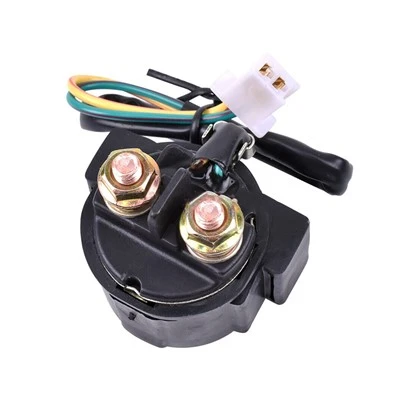
Motorcycle Starter Relay References
- Gilles, T. (2019). Automotive Ignition Systems: Fundamentals, Components, and Diagnostics. SAE International.
- Heywood, J. B. (2015). Internal Combustion Engine Fundamentals. McGraw-Hill Education.
- Technical Manual for Motorcycle Electronic Ignition Systems (4th ed.). Motorcycle Industry Council, 2021.
- Smith, R. (2020). Digital Control in Small Engine Ignition: Applications for Kick-Start and Battery-Less Systems. Journal of Small Engine Technology, 12(3), 45-58.
Maixing Electromechanical Co., Ltd.
As one of the most professional motorcycle digital cdi manufacturers and suppliers in China, we warmly welcome you to wholesale discount motorcycle digital cdi for sale here from our factory. All customized products are with high quality and low price. Contact us for quotation and free sample.
Address: No.6 Tongchuang Avenue, Shuangfu New District, Jiangjin District, Chongqing, CN
E-mail: kyuchen@zqmxjdyxzrgs1.wecom.work
WebSite: https://www.mx-electrical.com/
