If you’ve ever held a perfectly formed car body panel, a precision aerospace component, or even the crisp metal casing of your smartphone, you’ve interacted with a metal stamping die—one of the unsung workhorses of modern manufacturing. But here’s a truth I’ve learned over 12 years running a metal stamping die shop: a die is only as good as its surface. Too many new clients come to us thinking a hard block of tool steel, cut to the right shape, is enough to produce high-quality parts. Skip the surface treatment, though, and you’re looking at scrapped batches, unplanned downtime, and a die that wears out 10 times faster than it should. That’s the difference between a die that delivers consistent, profitable runs and one that becomes a costly mistake no one saw coming. Metal Stamping Dies
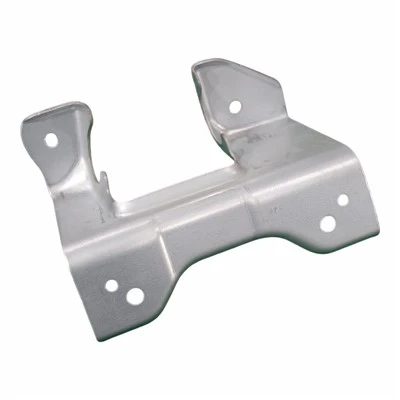
Let’s ground this in the day-to reality of what our team deals with on the shop floor. Last quarter, a small auto parts maker reached out to us because their stamping dies were failing at an alarming rate. They were stamping thin-gauge steel for brake caliper housings, a part that demands razor-sharp edges and zero surface defects. Their previous supplier had delivered a basic die milled from D2 tool steel—no surface treatment at all. After just 8,000 parts, the die showed severe adhesive wear: tiny metal shavings from the workpiece had welded themselves to the die’s cavity, leaving burrs on every caliper housing and forcing the shop to shut down production for three hours to polish the die. By the time they came to us, their die was already scored and pitted, and they were looking at a full rework job.
We offered two tailored surface treatments for their new die: a nitride coating and a polished diamond-like carbon (DLC) topcoat. The results spoke for themselves. That same die is now running at 45,000 parts and counting—no burrs, no unplanned stops, and the surface still looks as smooth as the day it left our shop. For them, that meant cutting their part rejection rate from 12% to less than 0.5%, saving thousands in scrap and overtime.
So why is surface treatment such a non-negotiable for metal stamping dies, instead of being an afterthought? Let’s break down the core roles surface treatment plays, starting with the most immediate benefit: wear resistance. Stamping dies endure brutal friction every time a workpiece is pressed into their cavity. For every part stamped, the die’s contact surfaces slide against the metal, often at high pressure and temperature. Without a protective coating, tool steel will wear down over time—either as abrasive wear (microscopic bits of the die’s surface flaking off into the workpiece) or adhesive wear (as we saw with that brake caliper job, where workpiece metal welds to the die). Surface treatments create a thin, hard layer that’s not part of the base steel, so the wear happens to the coating, not the die itself. We typically recommend nitriding for bulk-forming operations, like deep drawing for kitchen appliance shells, because it diffuses nitrogen into the steel to create a hard case that’s ten times more wear-resistant than untreated D2 steel. For high-precision operations, like stamping electronic components with tolerances measured in microns, we use DLC, which has a hardness second only to diamond and a ultra-smooth surface that eliminates most friction.
Next up: corrosion resistance, an often-overlooked factor that derails more dies than you’d think. Stamping isn’t just working with dry metal. Many operations use lubricants—oils, emulsions, even water-based fluids—to reduce friction. Those lubricants, especially if they have high water content, can seep into micro-cracks in the die’s surface (which form as steel cools and mills) and cause rust. For dies that sit idle between runs, rust can eat into the cavity walls in a matter of days, ruining the precision of the part. Surface treatments act as a barrier. Passivation, a treatment we use on stainless steel dies for medical device stamping, creates a chromium oxide layer that prevents rust even when the die is exposed to saline lubricants. For outdoor hardware parts, like fence brackets stamped from galvanized steel, we add a zinc-nickel coating that not only resists corrosion but also prevents the galvanized coating of the workpiece from sticking to the die.
Then there’s surface finish control, which is make-or-break for parts where aesthetics and precision matter. A stamped part’s surface doesn’t just have to be functional—it has to look good, too. Take consumer electronics, like the aluminum frames of laptops or headphones. Any scratch, uneven texture, or blemish from the die will be obvious, and retailers will reject every unit. An untreated die will have tiny milling marks and micro-pits that translate to the part’s surface. A polished surface treatment, often combined with a coating, smooths those imperfections out, resulting in a mirror-like finish on the part. For automotive body panels, where even a 0.1mm deviation from the smooth curve can ruin a car’s appearance, a micro-polished die surface ensures every panel has the exact same contour, eliminating gaps during assembly and reducing time spent adjusting panels on the production line.
Wait, but what about formability? That’s another area surface treatment transforms. When you’re deep drawing a complex part, like a car’s fuel tank or a metal can, the workpiece has to stretch and flow into the die’s cavity without tearing, wrinkling, or sticking. If the die’s surface is rough or has high friction, the workpiece will get caught, leading to tears in the material before it reaches the final shape. We had a client last year who was stamping high-strength steel for truck bed panels—one of the trickiest materials to work with because it’s prone to springback and tearing. Their untreated die was tearing 1 out of every 10 panels. We applied a low-friction DLC coating that reduced the coefficient of friction between the die and the workpiece by 70%. Their tear rate dropped to less than 0.1%, and they were able to increase their stamping speed by 20% because the material flowed through the die so much smoother. That’s not just better parts—that’s higher output, which directly translates to higher profit margins for the client.
Let’s also talk about longevity. A high-quality metal stamping die is a significant investment—we’re talking anywhere from $5,000 for a small, simple die to $50,000 or more for a large, complex die for automotive parts. If a die only lasts 10,000 runs, that’s a huge cost per part. But with the right surface treatment, a die can last 100,000 runs or more. We have dies we delivered in 2018 that are still going strong, thanks to a combination of nitriding and regular surface maintenance. For a client, that means they only have to buy or rework a die once every five years instead of once a year. It also means less downtime for die changes, which is a massive deal in manufacturing—every hour a production line is down costs money, and a die change can take hours if it’s worn out. Surface treatment extends die life, which cuts downtime and lowers total cost of ownership.
Now, I know what some of you might be thinking: “Surface treatment adds cost. Why not just skip it?” And it’s true—surface treatment is an extra step, so it does add a small percentage to the initial die cost. But let’s do the math. Take that client with the brake caliper dies: without surface treatment, they were paying $2,000 per die rework every time the die wore out, plus $15,000 a month in scrap parts. With surface treatment, the die cost went up by 15% initially, but they haven’t needed a rework in two years, and their scrap cost dropped to $800 a month. That’s a net savings of over $17,000 a year. For a automotive manufacturer with multiple dies, those savings add up fast. It’s not a cost—it’s an investment that pays for itself in a matter of months.
The key here is choosing the right surface treatment for the job, not a one-size-fits-all approach. Not every die needs DLC, just like not every die needs nitriding. At our shop, we work with clients to match treatments to their specific stamping application, material, and part requirements. For example:
- Nitriding is ideal for bulk forming, drawing, and piercing operations with carbon steel or alloy steel workpieces.
- DLC is perfect for high-precision stamping of thin-gauge materials, electronics components, and parts requiring ultra-smooth surfaces.
- Passivation is essential for stainless steel dies used in medical devices or food-grade components.
- Chrome plating works for heavy-duty dies, like those for forging or hot stamping, as it can handle high temperatures and extreme loads.
We also offer reconditioning services for existing dies that are showing wear—surface treatments can often restore a worn die almost to its original performance, without the need for a full replacement. That’s a big win for small to mid-sized manufacturers who might not have the budget for a new die every few years.
I’ve seen too many companies cut corners on surface treatment to save a few dollars upfront, only to end up with a trail of headaches: scrapped parts, delayed deliveries, costly reworks, and die replacements. The metal stamping industry is competitive, and every edge you can get—fewer defects, higher output, lower costs—comes down to the details. Surface treatment isn’t a detail. It’s the foundation of a good die.
If you’re designing a new stamping operation, or your current dies are causing too many problems with wear, defects, or downtime, let’s talk. We don’t just sell dies—we work with you to make sure your dies are built to last, perform consistently, and help your production run as smoothly as possible.
Custom Stamping Die References
Dieter, G. E. (1986). Mechanical Metallurgy. McGraw-Hill.
Kwak, T. S., & Kim, J. D. (2004). Effects of surface treatment on the wear resistance of metal stamping dies. Journal of Materials Processing Technology, 155-156, 1852-1857.
Ast, J. (2015). Surface Engineering for Die Casting and Stamping Tools. ASM International.
Dongguan Changdong Tool & Die Co., Ltd.
With abundant experience, we are one of the most reliable metal stamping dies manufacturers and suppliers in China. Please feel free to buy advanced metal stamping dies made in China here from our factory. Good service and quality products are available.
Address: No. 56-B, Fumin South Road, Dalang Town, Dongguan City, Guangdong Province, China
E-mail: sales@stamping-die.com
WebSite: https://www.metalstampingdie.com/
