If you’ve ever spent time around sheep, you know how chaotic moving them around a farm can feel—one spooked ewe, and suddenly you’ve got a dozen of them barreling through the gate, knocking over water troughs, and tangling up your arms in the process. I’ve been in that mess, too. For years, I ran a small family farm, wrangling sheep with nothing but a flimsy panel and a lot of yelling, and I’ve seen first-hand how frustratingly overpriced pre-built sheep handling systems can be. That’s when I started hearing questions from farmers all over: “Are there any DIY sheep handling systems that actually work, or do I have to drop a ton of cash on a brand-name setup?” Sheep Handling System
The short answer is: yes, DIY sheep handling systems are totally possible, but they only work if you build them right. Skip the Pinterest tier ideas that use random old fence posts and a piece of tarp—those fall apart the second a sheep panics and will just lead to more injuries for you and the flock. A good DIY setup has to follow the same core principles as professional systems: flow, safety, and low stress for both you and the sheep. I’ve spent years working on these setups, both on my own farm and helping other farmers tweak theirs, so let’s break down what actually makes a DIY system work, what pitfalls to avoid, and when it’s worth ditching the DIY and going with a professional setup.
First, let’s talk about why a sheep handling system isn’t just a random pen. Sheep are prey animals, and their brains are wired to avoid open, exposed spaces and stick close to each other. The best systems take advantage of that instinct to guide them, not fight against it. A pro setup uses curved alleyways (called “chutes”) that narrow gradually, solid side panels so sheep can’t see out and spook, and a holding pen that lets you sort sheep without crowding. For a DIY build, that means you can’t just string panels in a straight line—straight chutes make sheep stop dead, refusing to move forward because they can see everything at once and feel like they’re trapped. Curves do two things: they create a “funnel” effect that keeps sheep moving forward, and they let you sneak up on them a little without spooking them.
When I helped a farmer named Jake in central Ohio build his first DIY system two years ago, he tried a straight alley and it was a disaster. His 20 ewes would pile up at the far end, bleating, and refuse to budge. We redesigned it with a gentle 45-degree curve, and suddenly? They moved like clockwork. It was like flipping a switch. That’s the thing about sheep—you don’t have to force them. You just have to work with their instincts.
Now, let’s get into the actual DIY materials. Most farmers have scrap metal or wood lying around, so that’s the way to go to keep costs low. The key is to use sturdy, solid materials—no chicken wire, no flimsy pallets that split when a sheep leans against them. For panels, I recommend using 4×8 foot metal livestock panels (the kind with 4×4 inch holes, not the smaller ones for goats) because they’re cheap, durable, and easy to adjust. If you don’t have metal panels, pressure-treated wooden planks work, but make sure they’re at least 6 inches wide to prevent sheep from getting their heads stuck.
The chute width is non-negotiable. It needs to be exactly 22 to 24 inches wide. If it’s any narrower, sheep will bunch up; any wider, they’ll try to turn around. When I built my first DIY chute, I made it 30 inches wide because I thought “more space is better” and ended up wasting an hour untangling a sheep that wedged itself between two panel corners. Lesson learned. For the curves, you can bend metal panels slightly by loosening the bolts that hold the frame together, or space the posts along the curve a little wider than straight posts to create the arc.
Another DIY hack that works like a charm: adding a “sorting gate” at the end of the main chute. You can make this with a simple PVC frame and a small metal door, or even a old barn door that you can slide back and forth to separate sheep for shearing, vaccination, or checking. Just make sure the gate is tall enough—sheep can jump surprisingly high, so 48 inches minimum, no exceptions.
But here’s the big caveat with DIY systems: they’re only as good as your layout. A lot of farmers make the mistake of cramming their whole setup into a tiny corner of the farm, but you need at least 100 square feet of space for a basic setup (a holding pen, a chute, and a sorting area) to work. I’ve seen farmers try to build a system in 50 square feet and end up with sheep panicking and jumping over panels—way more dangerous than just taking an extra 10 minutes to clear a spot in the pasture.
Now, let’s talk about when DIY stops being worth it. I get it, money is tight for most small farmers. But there are some parts of a sheep handling system that you shouldn’t cut corners on, and that’s where a professional setup makes sense. For one, if you’re planning to show your sheep, or if you have a large flock (over 50 sheep), a custom-built system from a supplier like mine is way more efficient than DIY. My team has designed hundreds of setups that fit different farm sizes, and we know exactly how to adjust curves, heights, and widths to match your land and your flock’s habits. We also use materials that are built to last—hot-dipped galvanized steel, not the scrap metal that will rust through in a couple years.
Another big reason to skip DIY: safety for you. When sheep get spooked, they can weigh 150 pounds or more, and they’ll use their heads and hooves to get away. A flimsy DIY panel can collapse, leaving you stuck between a ewe and a metal pile, or a sheep can escape and run into a busy road. I’ve seen that happen to a farmer in Iowa who tried to build a DIY sorting pen with old wooden pallets—one pallet split, and a ram got out, ran half a mile, and got hit by a truck. That’s the kind of disaster that a well-built, professional system prevents.
I know, I know—hearing a supplier say “don’t DIY, buy from us” might sound like a sales pitch, but let me be real with you: I started this business after years of dealing with the aftermath of bad DIY builds. I’ve helped farmers fix setups that they spent hundreds of hours building, only to realize they don’t work, and end up having to spend more money replacing parts than they would have if they just bought a custom setup in the first place.
That said, if you’re set on DIY, here are my non-negotiable tips to make it work. First, test the layout with dummy sheep before you use your actual flock—use large hay bales or even old trash cans to mimic the width and curve of your chute. That way you can work out kinks without spooking a whole pen of sheep. Second, add a solid back gate to the chute—nothing makes sheep more anxious than seeing open space behind them. Third, make sure your holding pen has a way to drain water, because sheep will stand in mud and that will stress them out. Fourth, never build a system that’s higher than 5 feet unless you have a solid top rail—sheep will jump over anything less if they’re scared.
I also want to mention a common myth: some farmers think a DIY system will cost way less than a professional one. Let’s do the math. If you buy scrap metal panels for $50 each, and you need 10 panels for a basic setup, that’s $500. Add in posts, gates, hardware, and a few extra tools, and you’re looking at easily $800 to $1,000, plus 20+ hours of work building and adjusting it. A professional custom setup, built to fit your farm, often comes out to around the same price, and you get a system that’s guaranteed to work, has a warranty, and doesn’t require you to spend every weekend in the mud fixing it.
At the end of the day, sheep handling is all about making your life easier, not harder. If you’ve got the time, the tools, and a small flock that only needs basic handling (like moving between pastures or giving routine shots), a good DIY setup can work for you. But if you’ve got a larger operation, or you’re tired of dealing with spooked sheep, broken panels, and wasted weekends, it’s time to stop DIYing and invest in a system that’s built for your specific needs.
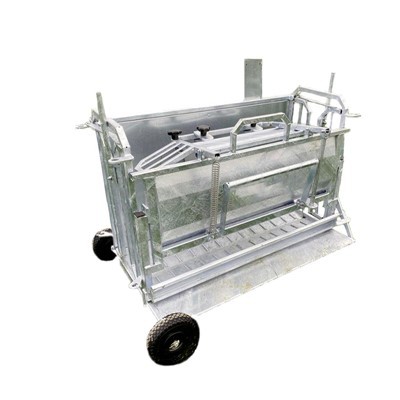
I’ve worked with farmers of all sizes, from small 10-sheep hobby farms to large commercial operations with 200+ head, and one thing’s true across the board: a good sheep handling system saves you hours of time, reduces stress for you and the sheep, and even cuts down on injuries. If you’re curious about what a custom setup would look like for your farm, or you want to bounce ideas off someone who actually works with sheep every day, reach out—we can walk through your space, talk about your needs, and give you a fair, transparent quote, no pressure to buy anything right away. Don’t spend another weekend wrestling sheep or fixing a wobbly DIY system—let’s build something that works for you.
Cattle Gates References:
- Grandin, T. (2015). Livestock Handling and Transport. CABI.
- American Sheep Industry Association. (2020). Small Farm Sheep Handling Guidelines.
- Swain, D. L. (2018). Low-Stress Livestock Handling for Small-Scale Producers. New Farm Press.
- University of California Agriculture and Natural Resources. (2019). Sheep Housing and Handling Systems for Small Farms.
Hebei Honde Industrial Trade Imp & Exp Co., Ltd.
With abundant experience, we are one of the most professional sheep handling system manufacturers and suppliers in China. We warmly welcome you to wholesale high quality sheep handling system for sale here from our factory. We also accept customized orders.
Address: Room 1904, Yintai International Building, No.36 Guang’an Street, Shijiazhuang, Hebei, China
E-mail: Helen@hbhonde.com
WebSite: https://www.hondelivestocksupply.com/
