Hey folks, if you’ve ever found yourself Googling something like “is a silicone reinforced steel wire hose flexible” at 10 PM while stressing over a project that just fell apart, same. I’m not some stuffy engineer in a lab coat (okay, fine, I own a couple for site audits) — I’m the person who spends most days answering that exact question from plumbers, mechanics, industrial maintenance guys, and even random DIYers who stumbled on our hoses on a parts site. Let’s cut the jargon, talk real about this, and why the answer isn’t as black and white as you might think. Silicone Reinforced Steel Wire Hose
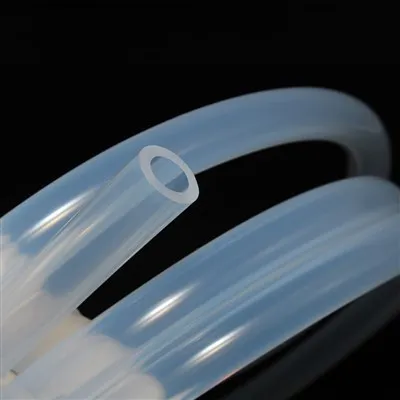
First, let’s get one thing straight: when people say “silicone reinforced steel wire hose,” they’re usually talking about the two main types we supply: the low-temp, lightweight ones for things like food conveying, ventilation ducts, or indoor dust collection, and the heavy-duty ones built for steam, high-pressure fluids, or industrial fumes that’ll make regular rubber hoses crack by next month. Flexibility here isn’t a one-size-fits-all thing — it’s tied to three core parts: the silicone itself, the steel wire reinforcement, and how the whole hose is constructed.
Let’s start with the silicone layer, because that’s the part everyone fixesates on. Pure silicone rubber is weirdly flexible — way more than natural rubber at cold temps, actually. Like, leave a standard rubber hose in a garage in Minnesota in January and it’ll snap if you bend it. Our silicone hoses? Bend that same way at -40°F and it’ll still flex. But here’s the catch: the thicker the silicone wall, the less give it has. If you’ve got a hose with a 10mm thick outer layer, that’s going to be stiffer than a 3mm thin one, obviously. I see this all the time: a plumber will call and say, “Your hose is too stiff!” and it turns out they ordered a 12mm wall for a sink drain application when they needed a 4mm. Miscommunication happens, no big deal.
Then there’s the steel wire. This is the reinforcement that separates silicone reinforced steel wire hoses from regular silicone hoses (which tend to flatten or kink if you bend them too sharp). The wire doesn’t just add strength — it’s the main driver of flexibility, really. The gauge of the wire matters a lot: thinner wire is way more bendable than thick, heavy gauge. We use a range, from 20-gauge for light-duty stuff like HVAC ducts up to 10-gauge for heavy industrial steam lines that need to hold shape under 150 PSI. The way the wire is arranged matters too. Most of our hoses have the wire wrapped in a single spiral, right? Single spiral is super flexible because the individual coils can move around each other. The other option is a braided wire, which is stiffer but more resistant to crushing from side pressure. So if you’re running a hose that’s going to be dragged under forklifts or stacked with heavy parts, braided is a no-brainer — but if you’re routing it around tight corners in a engine bay, spiral is way more flexible. I always tell customers: “Think of it like a metal spring. A thin paperclip spring bends easy, a thick coat hanger spring doesn’t. Same exact thing.” That’s the analogy that works every time, no engineer degree required.
Wait, but there’s another part no one talks about: the lay length of the wire. That’s how far apart each coil of wire is on the hose. A longer lay length means the coils are spaced wider, so there’s more room for them to shift when you bend the hose. Shorter lay length means coils are closer together, so the hose is stiffer. For example, a 2-inch ID hose with a 6-inch lay length is way more flexible than the same size with a 2-inch lay. We adjust the lay length for every application, but a lot of customers don’t ask about that — they just pick based on ID and pressure rating, and then wonder why it’s not bending right.
Now let’s get to real-world examples, because numbers are cool, but actual use cases? That’s what matters. Last month, I got a email from a guy who runs a custom motorcycle shop. He was using silicone hoses for his radiator cooling lines, but they kept collapsing under the engine’s vibration. He tried a regular silicone hose, kept kinking when he routed it around the frame, so he found our silicone reinforced steel wire hoses. He ordered a 1.5-inch ID, 3mm wall, spiral-wrapped 20-gauge wire. When he tested it, he texted me a pic of him bending it around the tight curve of the motorcycle’s frame, and said it was way more flexible than the aluminum pipe he was using. But then another customer, a paper mill maintenance manager, called and complained his hose was too stiff for a feed line that runs between two large tanks. Turns out he ordered a 4-inch ID hose with 10-gauge braided wire — that’s built for high pressure, not tight routing. We swapped him to the same 4-inch ID with 24-gauge spiral wire, and he said it bent like a dream, no more installation issues.
What about common myths? Let’s bust one right now: “more reinforcement = less flexible.” That’s half true, but only up to a point. If you need a hose that can hold 300 PSI of hot oil at 500°F, you can’t get away with super thin wire — you need thicker gauge or even double wire layers. But you can compensate with a thinner silicone wall and a longer lay length to keep flexibility. We did that for a mining customer a while back who needed hoses that could handle hydraulic fluid and bend around heavy equipment parts, no kinks. We built them a double-spiral reinforced hose with 12-gauge wire, but a 3mm silicone wall instead of the standard 5mm for that pressure rating, and a 8-inch lay length. They said it was just as flexible as their old rubber hose, but way more resistant to abrasion from rocks and steel. That’s the sweet spot, right? Matching the reinforcement to the job, not just the pressure rating.
Another myth: silicone hoses are always less flexible than rubber. Nope, not at all, especially at temperature extremes. I’ve been in a cold storage warehouse where regular rubber hoses snapped when someone tried to bend them to connect a freezer line, but our silicone reinforced steel wire hose bent without a crease at -20°F. The silicone doesn’t get brittle like rubber does at cold temps, and the steel wire stays flexible too — as long as it’s not exposed to moisture for years (but that’s a corrosion thing, not a flexibility thing). At high temps, silicone actually stays flexible longer than rubber, which turns mushy at 300°F, while our hoses keep bending up to 500°F. That’s why so many exhaust and engine applications switch to silicone reinforced steel wire hoses these days.
Wait, what about the stuff that makes people say they’re too stiff? Kinking. That’s a big complaint, but kinking isn’t just about flexibility — it’s about the bend radius. Every hose has a minimum bend radius, the sharpest angle you can bend it without permanently damaging the wire or the silicone. If you bend a silicone reinforced steel wire hose to a radius smaller than its minimum, it’ll kink, plain and simple. For example, a 1-inch ID hose we supply has a minimum bend radius of 2 inches, so you can’t wrap it around a 1-inch pipe and expect it to not kink. A regular rubber hose might have a smaller bend radius, but it’ll collapse, which is just as bad. I always tell customers: “Check the bend radius chart before you install it. If you need to go sharper, order a smaller ID hose. It’ll bend easier, even if it’s handling the same flow. Trust me, I’ve seen enough messed up installations to know this trick works.”
Now, let’s talk about how we test flexibility at our shop, because real testing beats specs. We don’t just go by what the wire gauge or lay length says. We take every batch of hoses off the production line and do a simple test: we hang the hose straight, then apply a 5-pound weight to the end and see how much it bends. We also bend it 90 degrees 100 times and check for any cracks in the silicone or gaps in the wire. Last quarter, we had a batch of 2-inch ID hoses that passed all pressure and temperature tests, but when we did the bend test, they were stiffer than we wanted. Turns out the wire supplier sent a batch with a slightly shorter lay length, so we sent them back and switched to a different supplier — that’s how important flexibility is to us. We’d rather delay a shipment a day than send a hose that’s going to cause a customer installation headache, which is bad for both of us.
So putting it all together: is a silicone reinforced steel wire hose flexible? The short answer is: it can be, as flexible as you need it to be, as long as you pick the right construction for your application. If you need a lightweight hose that bends around tight engine bays for coolant or vacuum lines, go for thin wall, high-gauge spiral wire, long lay length. If you need a heavy-duty hose that can handle steam or high pressure while being able to bend around heavy industrial parts, there’s a reinforced version of that too. It’s not a one-size-fits-all product, and that’s what makes it great. I used to work at a parts distributor where I’d hear people complain that “all silicone hoses are stiff,” but that’s because they were grabbing the wrong type. Once they realized there are different builds, everything clicked.
At the end of the day, when you’re choosing a hose, flexibility is just one piece of the puzzle — you also need to think about temperature, pressure, chemical compatibility, and abrasion resistance. But flexibility doesn’t have to mean sacrificing strength, or vice versa. That’s the thing most people don’t get: silicone reinforced steel wire hoses combine the best of both worlds. They have the bendability of silicone, the shape retention of steel wire, and they outlast regular rubber hoses in almost every application that matters.
If you’re dealing with a project where you’re not sure if a silicone reinforced steel wire hose is going to be flexible enough, or if you’re tired of hoses that kink, crack, or collapse when you need them, reach out. I don’t do sales pitches — I just give honest advice based on what works for our customers, and I can help you pick the right build for your specific use case. No jargon, no hidden fees, just a hose that does what you need it to do.
Now, a quick note: don’t listen to any random blog that says all silicone reinforced steel wire hoses are too stiff or way too bendy. The reality is in the details, and that’s what we specialize in. We make these hoses for every industry, from food processing to automotive to mining, so we’ve seen every flexibility scenario there is. If you’ve got a question about a specific application, or you need help sizing a hose, hit us up. We’re here to make your job easier, not harder.
Silicone Baby Tableware References
- Coran, A. Y. (2008). Rubber Science and Technology. John Wiley & Sons.
- International Organization for Standardization. (2019). Rubber Hoses and Hose Assemblies for Industrial Applications — Specification. ISO 1402:2019.
- Gent, A. N. (2012). Engineering Design with Silicones. Smithers Rapra Press.
- Society of Automotive Engineers. (2020). Rubber and Silicone Hoses for Automotive Cooling Systems. SAE J20.
Dongguan Hengyue New Material Technology Co., Ltd.
As one of the most professional silicone reinforced steel wire hose manufacturers and suppliers in China, we also support customized service. We warmly welcome you to wholesale bulk cheap silicone reinforced steel wire hose from our factory. If you have any enquiry about quotation and free sample, please feel free to email us.
Address: Building 2, No. 3, Yindou Third Road, Qingxi Town, Dongguan City, Guangdong Province
E-mail: dghengyue@126.com
WebSite: https://www.hengyuesilicone.com/
