If you’ve ever stood beneath a fire truck as it sprays a steady stream of water to douse a commercial blaze, or watched a construction crew guide a pressurized concrete pump to pour the foundation of a new office building, you’ve likely used a steel wire hose without even realizing it. For 12 years, I’ve run a steel wire hose supply business—my shop sits in a mid-sized industrial park in the American Midwest, where our team works with dozens of clients: municipal fire departments, oil and gas refineries, agricultural irrigation operators, and heavy machinery manufacturers. Every time a client calls asking, “What’s the difference between a standard rubber hose and yours?” I start with the foundation: the materials we use to build steel wire hoses aren’t just parts stitched together—they’re engineered to balance flexibility, pressure resistance, and longevity for the exact job they’re meant to do. Most of the misinformation I hear from new clients comes from mistaking steel wire hoses for “reinforced rubber hoses,” which are different entirely. Reinforced hoses use thin, low-tensile-strength wire to add mild stiffness; steel wire hoses rely on high-grade steel as a core structural component, and each layer is selected with a specific purpose in mind. Steel Wire Hose

Let’s break it down layer by layer, starting with the innermost part, which sees the most stress: the inner tube. This isn’t just a rubber tube to hold liquid or gas—it has to resist whatever flows through it. For applications like fire hoses, where we carry water, sometimes with added foam suppressants, we use synthetic rubber compounds, usually EPDM (Ethylene Propylene Diene Monomer) or natural rubber blends. EPDM is non-reactive to most municipal water, resistant to UV light when the hose is stored, and can handle moderate temperature swings from 32°F to 212°F. For oil and gas clients, where the hose carries diesel, hydraulic fluid, or natural gas, we switch to Nitrile rubber (NBR) because it’s oil-resistant; standard rubber would swell and crack after a few uses with petroleum products. For aggressive industrial chemicals, we use Viton (FKM), a fluoropolymer rubber that can handle acids, alkalis, and extreme temperatures up to 400°F. I’ve seen too many clients try to save a few bucks here by using a generic inner tube, only to have it split within six months—when a hose fails at a refinery, it’s not just a mess, it’s a safety hazard. That’s why we test every inner tube batch for pressure resistance before it touches a steel wire.
Next comes the first steel reinforcement layer, and this is where the “steel wire” part earns its name. Most steel wire hoses use two layers of wire, twisted in opposite directions to prevent twisting under pressure. The first layer is made of high-carbon steel wire, usually between 0.3mm and 1.2mm thick. High-carbon steel is chosen because it has a tensile strength of around 1,200 MPa—way stronger than the mild steel used for nails or pipes. Wait, you might ask: why not use stainless steel here? Stainless steel has good corrosion resistance, but it’s more brittle than high-carbon steel, and more expensive. We only use stainless steel in very specific cases—like hoses for marine applications, where saltwater would corrode regular steel within a year—because regular steel has a better balance of strength and cost for 90% of our clients. The wire is twisted in a “helix” pattern, not braided, for this inner layer; the helix gives the hose flexibility while holding back 70% of the internal pressure. If you’ve ever folded a fire hose by hand, that flexibility comes from the helical twist of these steel wires.
The second reinforcement layer is woven steel wire, usually a thinner gauge than the inner helix, made from galvanized steel. Wait, galvanized? That’s a zinc coating to prevent rust. I learned early on in this business that if you skip the galvanization on the outer wire layer, the hose will develop small rust spots after a few months of use, which expand and weaken the structure until it bursts. The woven layer runs perpendicular to the first helix layer, so it adds another 25% of pressure resistance, bringing the total to 95% of the strength needed for high-pressure applications. This is the layer that makes steel wire hoses different from regular reinforced hoses—without this second woven steel layer, the hose would bulge or burst at pressures over 100 PSI; our hoses can handle up to 5,000 PSI for heavy machinery use, which is non-negotiable for construction or industrial pumping jobs.
After the two steel reinforcement layers, we add a middle bonding layer—wait, that’s a part most suppliers skip, and it’s why our hoses last 30% longer than standard options. If you just glue rubber to steel, the layers will separate when pressure pulses through the hose. Our bonding layer is a specialized rubber adhesive, usually made from chlorosulfonated polyethylene (CSPE), that chemically bonds to both the inner rubber tube and the steel wires. We test this bonding layer by submerging a finished hose in water at 140°F for 72 hours, then running it at full pressure to make sure no layers peel. Last year, a construction client tried a cheaper hose that didn’t have this layer; after two weeks of use, the steel layers separated, and the hose burst, damaging a $20,000 concrete pump. That’s the kind of mistake we help clients avoid by sticking to every material step.
Finally, the outermost layer—the cover. This is the first line of defense against abrasion, weather, and physical damage. For fire hoses, we use a heavy-duty canvas cover coated in PVC, which is puncture-resistant and easy to clean. For agricultural hoses, which get dragged over dirt and farm equipment, we use a thicker EPDM cover that resists cuts and UV light from being stored outside. For marine hoses, we use a neoprene cover, which is oil-resistant and can handle saltwater spray. I’ve had clients bring back hoses that were damaged by running over farm plows, and when we look at the cover, if it’s a generic PVC that split, we tell them we use a thicker, reinforced cover for that application. It’s a small detail, but it’s what makes our hoses work for their specific environment, not just a one-size-fits-all product.
Now, let’s clear up a common misconception: some suppliers market “single steel wire layer” hoses as steel wire hoses, but that’s a misnomer. A true steel wire hose requires at least two steel reinforcement layers, because pressure from the inside can cause a single layer to stretch unevenly, leading to leaks or bursts. We’ve had clients come to us after buying a cheap single-layer hose for fire department use, only to have it split while they were fighting a structure fire. That’s why we test every finished hose with a hydrostatic test—filling it with water and pressurizing it 20% above its maximum rated pressure—to make sure all layers hold. Last quarter, we tested 25 hoses, and three failed: two had misaligned steel wires, and one had a faulty bonding layer. We scrapped those instead of selling them, even though that cut into our profits that month, but it’s why we’ve had the same 18 core clients for over five years.
Another question I get a lot: can we use recycled steel wire? For the inner reinforcement layer, no. Recycled high-carbon steel can have impurities that make it brittle, which is a safety risk. For the outer woven steel layer, we use recycled galvanized steel, because that layer doesn’t carry as much of the structural load. It’s a way to keep costs down without sacrificing safety, and we’re always looking for ways to be more sustainable, especially with more clients asking about eco-friendly materials.
So why does this all matter to you, if you’re a client looking for a steel wire hose? Whether you’re a fire chief needing a hose that won’t fail mid-battle, a construction manager needing a hose that can handle 3,000 PSI for concrete, or a farmer needing a hose that can stand up to daily wear and tear, the materials we choose make the difference between a hose that works for five years and one that needs replacing every six months. I’ve been in this business long enough to know that the cheapest quote isn’t always the best—skipping a good bonding layer, or using generic inner rubber, will cost you more in repairs, downtime, and safety risks in the long run.
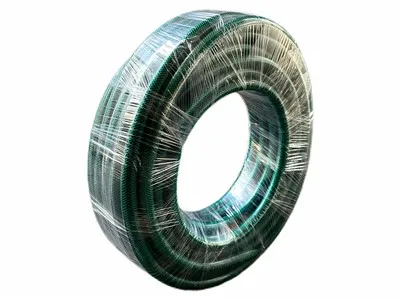
If you’re looking to replace your existing steel wire hoses, or you’re tired of hoses that fail when you need them most, let’s talk. We can work with you to build a custom hose for your specific application, whether that’s a fire hose for your municipal department, a high-pressure hose for your refinery, or a durable hose for your farm equipment. Just reach out to set up a time to discuss your needs, and we’ll help you find the right materials for the job.
PVC Suction Hose References
- ASTM International. (2021). Standard Specification for Steel Wire Reinforced Rubber Hoses for Hydraulic Applications. West Conshohocken, PA.
- Society of Fire Protection Engineers. (2022). Fire Hose Design and Material Selection. Bethesda, MD.
- Rubber Manufacturers Association. (2020). Synthetic Rubber Compounds for Industrial Hose Applications. Washington, DC.
Weifang Xinzhiyuan Plastic Co., Ltd.
As one of the most experienced steel wire hose manufacturers and suppliers in China, we offer a wide range of products with superior quality. Please feel free to wholesale premium steel wire hose made in China here from our factory. We also accept customized orders.
Address: No. 700, Tongle Street, Economic Development Zone, Changle County, Weifang City, Shandong Province
E-mail: hua@xzypvchose.com
WebSite: https://www.pvchose-xzy.com/
