Hey everyone, it’s Jake from your go-to testing instrument supplier—you know, the team that gets that your gear isn’t just metal and circuits, it’s the backbone of your lab or production line. Power outages aren’t just an annoying blip in the workday; they’re a real risk to your expensive, precision testing tools. I’ve seen way too many labs and manufacturing spots mess this up lately—yanking cords mid-blackout, leaving instruments on standby, panicking and pulling weird fixes that end up costing them thousands in repairs or calibration delays. So today, I’m walking you through exactly how to handle your testing instruments when the lights cut out—no fancy jargon, just the stuff we’ve learned from fixing customers’ gear and helping them prep for outages. Testing Instrument
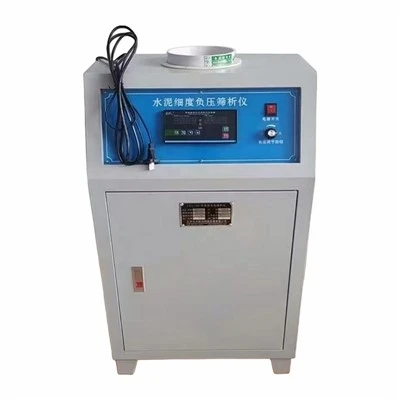
First off, let’s get one thing straight: not all power outages are the same. Some are 10-second blips that turn lights back on before you even grab a flashlight, others are multi-hour blackouts from a storm or grid failure. Your approach should shift, but there are non-negotiables no matter how long the outage lasts. Let’s start with the immediate, split-second stuff—what to do the second you notice the power dip. I’ve seen a guy yank a high-frequency oscilloscope cord mid-blip because he freaked, and that fried the circuit board. Bad move. The first rule: don’t yank cords unless you have to. Wait 10 seconds first. A lot of the time, it’s just a momentary glitch, and the unit will auto-reboot on its own without harm. If the lights stay out, then you move.
Wait, but what about things that are actually running a test? Like, you’re halfway through a critical pharmaceutical dissolution test or a materials strength test, and the power cuts. That’s panic-inducing, I get it. Don’t just hit the “stop” button and walk away—some instruments store test data mid-run, and abrupt shutdowns can corrupt that data, or even mess up the test cell (like, if you have a load cell compressed on a material test machine, turning it off mid-test can leave residual stress that throws off future results). My advice here: stay calm, if you have a backup battery (we sell those for most of our instruments, by the way), switch to that right away, if not, log whatever test progress you can, note the time, and label the sample so you can pick up where you left off. Don’t just toss the sample or skip to a new test later—you might have to repeat it, and at least you have a record of what you had.
Now, for the immediate action once you confirm it’s a real, ongoing outage. Step one: power down your instruments properly. Here’s how to do it right: first, turn the unit’s main power switch to “off” (most of our testing gear has a dedicated hardware switch, not just the touchscreen “power” button). Then, unplug the power cord? Wait, no—wait, hold up. I used to tell customers to unplug, but recent experience taught me a caveat. If the outage is from a storm, there’s a risk of power surges when the grid comes back on. So if you’re in a storm-prone area, unplugging is good, but only after you turn the unit off properly. If it’s a short, planned outage (like your utility company notifying you they’re working on lines later that day), then you can just turn the unit to standby—our instruments have a standby mode that uses way less power and keeps calibration settings intact, which is way better than fully powering down and having to recalibrate later. That’s a big one I see people miss: calibration drift. If you power down a precision instrument improperly, you might have to send it in for recalibration, which is costly and takes time. Standby mode preserves that calibration, so it’s the way to go for planned outages.
Next, what about different types of testing instruments? They’re not all the same—handling a pH meter for water testing is way different from a 3D coordinate measuring machine (CMM) that’s half the size of a room. Let’s break down the most common ones we supply, so you get specific. First, benchtop analytical instruments: pH meters, spectrophotometers, oven/incubators. For these, if the power cuts, turn them off, unplug if storm-related. For ovens, don’t open the door if the power’s out—opening it will let all the heat escape, and if you have a sample that’s curing or sterilizing, it might ruin it. I had a customer last year who opened an autoclave mid-outage, and the pressure dropped so fast they had to re-run the entire batch, plus the autoclave’s door seal got damaged from the rapid temp change. Ouch. For incubators, same thing—if you’re growing cultures, the heat loss is a bigger risk than the power outage itself. If the outage is under an hour, keep the door closed, and when power comes back on, check the temperature before putting new samples in. For multi-hour outages, if you have a portable cooler with ice (for temperature-sensitive samples), move them over—just don’t forget to label them too.
Then there are production-line testing instruments—like in-line thickness gauges for metal or plastic, or leak testers for packaging. These are often hardwired into the line, so yanking the cord mid-line stop can mess up the line’s alignment. For these, first alert your line supervisor to hit the line’s emergency stop, then if there’s a dedicated power disconnect for the testing unit, turn that off, not the whole line. Also, leak testers: if power cuts while a test is running, you might have residual pressure in the test chamber. Don’t open it until power comes back on and you’ve bled the pressure safely—opening a pressurized chamber without power (if the pressure release valve isn’t working) can be dangerous. We’ve had customers skip that step and get minor injuries, so take that seriously.
Now, when power comes back on. This is the next big mistake people make—they rush to turn everything back on, and that’s when surges kill instruments. First, wait 2-3 minutes after the power comes back. That’s long enough to let the grid stabilize, so you don’t get a surge from the power company restoring service. Then, if you had unplugged anything, plug them back in one at a time, not all at once. Plugging multiple high-draw instruments (like CMMs, environmental chambers) in at once when power comes on can cause a second surge that fries circuits. Then, turn each unit on in the right order. For most benchtop instruments, the order doesn’t matter, but for larger gear, turn the main power on first, then the control module, then let it boot up fully before doing anything. Wait for the instrument to finish its self-test—most of our gear has a diagnostic screen that runs when it boots up. If that self-test shows an error, don’t panic yet, but don’t run a test either. Give it 10 minutes, if the error stays, give us a call—we can help troubleshoot, or if it’s something we can fix remotely, great, if not, we can send a service tech fast.
Also, there’s the thing about surge protectors and UPS (uninterruptible power supply) units. We sell a lot of UPS systems for testing instruments, and I can’t stress enough how worth it they are. A UPS isn’t just for your office desktop—it’s for protecting $10k+ testing gear. A good UPS will keep your instrument running for 15-30 minutes during an outage, enough to save test data, power it down properly, or even keep environmental conditions steady for sensitive samples. But here’s the catch: you have to maintain your UPS. Replace the batteries every 3-5 years, test it once a quarter. I had a customer last month who had a UPS that was 6 years old, fully dead during an outage, and his HPLC (high-performance liquid chromatograph) fried when the power came back on. A $200 battery replacement would have saved him $12k in instrument repairs. Don’t skip that.
What about planned vs. unplanned outages? We get a lot of labs that schedule calibration or maintenance around planned outages, and that’s smart. If you know an outage is coming, turn off all non-critical instruments ahead of time—leave only the critical ones (like incubators with live samples) on a UPS or standby. Don’t run a big test right before a planned outage, either—finish it or pause it properly, so you don’t lose data. For unplanned outages, keep a quick checklist taped to every instrument station. We give these out for free to our regular customers, but even if you just write it on a sticky note, it will save you a ton of stress. The checklist would be: 1. Wait 10 seconds, confirm outage. 2. Log test progress if running a test. 3. Turn instrument to proper off/standby. 4. Unplug if storm-related. 5. Secure samples. 6. When power comes back, wait 3 minutes, plug in one at a time, run self-test. Simple, but most people don’t have that, so they make mistakes.
Wait, what about common myths? Let’s bust a couple, because I hear these all the time. Myth 1: “Turning an instrument off and on during an outage will damage it.” No, if you do it properly, it’s way better than leaving it on and letting it reboot on its own during a surge. Myth 2: “All testing instruments have built-in surge protection.” Nope. Basic surge protection is for consumer electronics, not industrial testing gear. You need a heavy-duty surge protector rated for 1500 joules or more, specifically made for precision instruments. The cheap ones from the hardware store won’t cut it. Myth 3: “Calibration is only needed after a power surge.” No, improper power handling can cause calibration drift even without a surge, especially for things like force gauges or spectrometers that are sensitive to power fluctuations. So even if there’s no obvious damage, you should get your instrument recalibrated after a major outage, or a surge.
Another thing: if you’re in a facility with multiple instruments, label your power circuits. That sounds trivial, but if an outage hits and you don’t know which circuit is for your test lab, you can waste 20 minutes flipping breakers, which is extra time your instruments are unprotected. We work with a lot of facilities to help them map their lab circuits, so they know exactly what’s on which breaker—something that’s super helpful during outages.
I mentioned earlier that I’m from a testing instrument supplier, so let’s tie this back to that. We don’t just sell gear—we help our customers keep it running, even when the grid fails. That’s why we stock all the UPS units, surge protectors, replacement batteries, and even have a 24/7 service line for when outages go wrong. If you’re a lab manager or production supervisor reading this, you’ve probably had an outage scare that made you think, “I need a better plan.” That’s exactly what we’re here for.
Let’s wrap this up with a quick recap, so you don’t have to scroll back. When the lights go out:
- Stay calm, wait 10 seconds to confirm it’s not a blip.
- If mid-test, log progress and secure samples.
- Power off properly (not just pull the cord) – use standby for planned outages, unplug only during storm outages.
- When power returns, wait 3 minutes, plug instruments in one at a time, run self-tests.
- Maintain your UPS and surge protectors, don’t skip battery replacements.
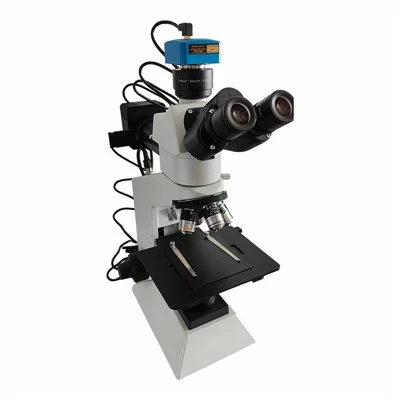
And if you need help with any of this—whether it’s picking the right UPS for your specific testing instrument, setting up a lab outage plan, or getting service for a damaged unit—reach out. We’re here to help, no pressure, just honest advice from people who deal with this every single day.
Compression Testing Machine References:
- National Institute of Standards and Technology. (2022). Best Practices for Laboratory Electrical Safety and Equipment Maintenance. NIST Special Publication 1800-35.
- International Organization for Standardization. (2021). General Requirements for the Competence of Testing and Calibration Laboratories. ISO/IEC 17025:2017.
- Institute of Electrical and Electronics Engineers. (2020). Surge Protection for Industrial Control and Test Equipment. IEEE Std C37.90.1-2019.
Hebei Wanluda Testing Instrument Equipment Co., Ltd.
As one of the most professional testing instrument manufacturers and suppliers in China, we have world-leading production equipment and strong manufacturing capabilities. Please rest assured to buy advanced testing instrument made in China here from our factory.
Address: Zhouguantun Village, Xian County, Cangzhou City, Hebei Province, P.R.China
E-mail: wldinstrument@163.com
WebSite: https://www.wldinstrument.com/
