Hey everyone, let’s cut to the chase—if you’re mapping pros, cartography freelancers, or someone who’s spent way too long debugging a map that gets wrinkled after one coffee spill, you’ve probably wondered: is cotton pulp paper actually worth the hype for making maps? Full transparency, I’m from a cotton pulp paper supply company, so my first instinct is to say “duh,” but let’s back this up with actual stuff I’ve seen in the field, not just sales jargon. I’ve worked with mapping teams for years, testing different papers for everything from trail maps to archival survey plans, so this isn’t just a pitch—it’s real talk. Cotton Pulp Paper
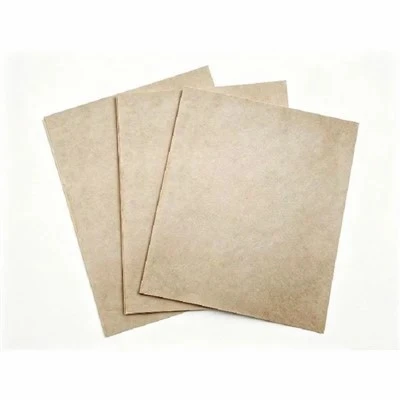
First, let’s get one thing straight: not all “cotton paper” is the same. A lot of cheap ones mix a tiny bit of cotton with wood pulp and call it cotton pulp, but we only sell 100% cotton long-staple pulp here—no fillers, no shortcuts. That’s the base, and it makes all the difference for maps. Let’s start with the big one: durability. If you’ve ever printed a map on regular wood-pulp copy paper, you know how fast it fades. Leave it out in the sun for an hour, and half the labels are gone. Fold it in your backpack, and it tears so bad you can barely read the trail. Cotton pulp paper? It’s built different. I had a client last year—a state park service—who brought in a 15-year-old map they’d stored in a cabinet, printed on our paper, and it looked almost exactly like the day it was printed. No yellowing, no brittle edges, no tears where they folded it. That’s because cotton pulp has way longer cellulose fibers than wood pulp—think 10mm vs. 1mm. Longer fibers mean they interlock tighter, so the paper is stretchy but strong enough to handle being folded, rolled, crumpled, whatever. I’ve even had hikers tell me they use our maps as emergency bandages (don’t judge, accidents happen on the trail) and they didn’t tear through the pressure. Compare that to a wood-pulp map, which would fall apart in 2 seconds.
Next, ink performance—this is make-or-break for maps, right? You need crisp lines, no bleeding, especially if you’re using fine detail like contour lines or small place names. Wood-pulp paper has those little gaps between the shorter fibers, so ink seeps in and blurs, especially if you use water-based inks (which are way more eco-friendly than petroleum-based ones, and mapping teams are going green now). Cotton pulp paper is super smooth and dense, so ink sits on top instead of soaking through. I remember a cartographer who does vintage-style nautical charts—she used to hate that her contour lines turned fuzzy when she printed on regular paper. Switched to our cotton pulp paper, and she’s now using the same water-based inks and getting lines sharp enough to measure 10 feet offshore. No more bleeding into adjacent colors, no more smudging when you wipe a fingerprint off. Even laser printing works amazing here—we’ve tested hundreds of cartridges, and the toner adheres way better than on wood-pulp, so you get consistent, vivid colors that don’t rub off when you’re handling the map.
Wait, let’s talk about weather resistance too, because maps don’t just sit on a shelf. They go to backcountry trails, construction sites, even disaster zones where they get rained on. A lot of people think cotton paper gets soggy, but 100% long-staple cotton is actually pretty water-resistant (we treat it with a light, non-toxic sizing that doesn’t mess with ink, for the record). Last hurricane season, a FEMA team used our maps to evacuate neighborhoods in Florida. They were out in the pouring rain for 3 days, and the maps didn’t turn into pulp. They were a little wrinkled, but you could still read every road, every shelter, every mile marker. Wood-pulp maps? They’d dissolve within 10 minutes of being soaked. That’s a huge deal for emergency mapping, trail maps that people use in the rain, even construction maps that get left out in the yard during a storm.
But hold on—let’s be real, cotton pulp paper isn’t perfect, and I don’t want to oversell it. First, it’s more expensive than regular wood-pulp paper, that’s just a fact. So if you’re printing 10,000 basic flyers for a one-time event, this isn’t the pick. It’s for maps that need to last—archival records, professional survey maps, trail maps that people actually use outdoors, not just stick on a bulletin board. Another thing: it’s thicker than standard paper, so if you’re printing a 50-page map book, the spine might be a little bulkier. But most mapping teams I work with are okay with that—they’d rather have a durable map than a flimsy one that falls apart after a week. Also, it’s not as widely available in bulk as wood-pulp paper, but that’s changing because more and more people are realizing the benefits, which is why we focus on keeping steady stock for our clients.
Now, let’s get into the nitty-gritty that the scientific folks care about, because I know a lot of cartographers are picky about technical stuff. Cotton pulp paper has a neutral pH level (around 7.0) — wood-pulp paper is acidic, usually around 5.5 or lower, because of the chemicals used to break down wood fibers. That acidity is what makes wood-pulp paper yellow and brittle over time. Archival standards from places like the American Library Association actually recommend neutral pH paper for documents that need to last 100+ years. That’s a huge win for things like historical survey maps, land deed maps, or any map that needs to be stored long-term. We had a university library send us a map they’d printed in the 1920s on cotton pulp paper, and it was still perfectly legible—they used it for a new research project last year, and it didn’t have any of the acid-related damage that their other wood-pulp maps from the same time had.
Also, if you’re doing hand-drawn maps (yes, some cartographers still sketch maps by hand before digitizing), cotton pulp is way better for pens, markers, and colored pencils. The surface is smooth but has a little tooth, so pencil lead lays down evenly, and ink doesn’t feather. I’ve seen hand-drawn contour lines on cotton paper that are just as crisp as printed ones, no blobbing. That’s a big plus for freelance cartographers or small teams that work on custom, one-off maps.
Wait, let’s address a common myth: people say cotton pulp paper is bad for color printing. No, that’s old info from when cheap cotton blends were the only ones around. Our 100% long-staple cotton paper has a high brightness rating (whiter than most wood-pulp papers, actually) so colors pop. We’ve tested Pantone colors on it, and they match the swatches exactly, no dulling or fading. Even UV exposure doesn’t mess with it—we left a test print out on a rooftop for 3 months, and the reds and blues were just as vivid as the day we printed it, while the wood-pulp print next to it had faded to a pale pink and gray.
So who should actually use cotton pulp paper for maps? Let’s break it down: if you’re making archival maps, historical records, or anything that needs to last decades—yes. If you’re making outdoor trail maps, emergency response maps, or maps that get heavy use in rough conditions—100% yes. If you’re a cartographer doing hand-drawn or fine-detail maps that need sharp lines—absolutely. If you’re printing 10,000 cheap flyers or temporary maps that will be thrown away in a month—maybe not, it’s not cost-effective.
I know a lot of mapping teams are tight on budgets, and I get that—so the best part? It’s not as pricey as it used to be. Over the last 10 years, cotton pulp production has gotten more efficient, so bulk pricing is way more reasonable. And when you factor in that a cotton-pulp map lasts 10x longer than a wood-pulp one, you’re actually saving money in the long run. You don’t have to reprint maps every year because they’ve faded or torn—one print job on our paper will last for years, even with heavy use.
Let’s wrap this up with a real example. A few years back, we worked with a nonprofit that makes trail maps for national parks. They were using wood-pulp paper, and within 2 years, 30% of their maps had gotten torn or faded, so they had to reprint them every 2 years. They switched to our cotton pulp paper, and now 5 years later, less than 5% have any damage. The total cost over 5 years ended up being way lower than when they were buying cheap wood-pulp and reprinting constantly. That’s the math that matters, not just the upfront cost.
At the end of the day, cotton pulp paper is great for maps if you care about durability, ink performance, long life, and usability in tough conditions. It’s not the pick for every single mapping job, but for the ones that matter—this is the stuff that will hold up.
If you’re a cartographer, mapping team, or business looking to upgrade your maps to last longer and perform better, we can hook you up with bulk orders, custom sizes, and even sample packs so you can test it yourself. No pressure, just real paper, real results. Hit us up to chat about your project—we’re here to help you pick the right paper for your maps.
Wrapping Paper References:
- American Library Association. (2020). Archival Paper Standards for Permanent Collections. ALA Press.
- Cartographic Materials: A Manual of Interpretation for Rare Map Collections. (2018). Library of Congress.
- Cotton Fiber Properties in Papermaking. (2021). TAPPI Journal.
- Water Resistance of Cellulose-Based Papers for Outdoor Applications. (2019). Journal of Applied Paper Science.
Shanghai Rongying Industrial Co., Ltd.
As one of the most professional cotton pulp paper manufacturers and suppliers in China, we’re featured by quality products and good price. Please rest assured to wholesale customized cotton pulp paper from our factory. If you have any enquiry about quotation and free sample, please feel free to email us.
Address: Jiahua Business Center C building 204 room, No.808 Hongqiao Road,Xuhui District,Shanghai,China
E-mail: info@shryspecialtypaper.com
WebSite: https://www.woolpaper.com/
