Alright, let’s cut to the chase—if you’ve ever sat in on an endoscopic procedure and thought, “This tool works, but it’s not quite right for this patient,” you’re not alone. For years, endoscopic cannulas have been treated as one-size-fits-all: standard lengths, diameters, and tip shapes that cross our supply shelves, no questions asked. But here’s the game-changer I see every day as an endoscopic cannulas supplier: patients aren’t standard, so why should the tools that treat them be? That’s why the question “Can endoscopic cannulas be customized according to patient needs?” isn’t just a nice-to-have—it’s the core of what we do, and honestly, it’s the future of endoscopy. Let’s break this down, no stuffy jargon, just real talk from someone who’s been shipping these things to clinics for over a decade. Endoscopic Cannulas
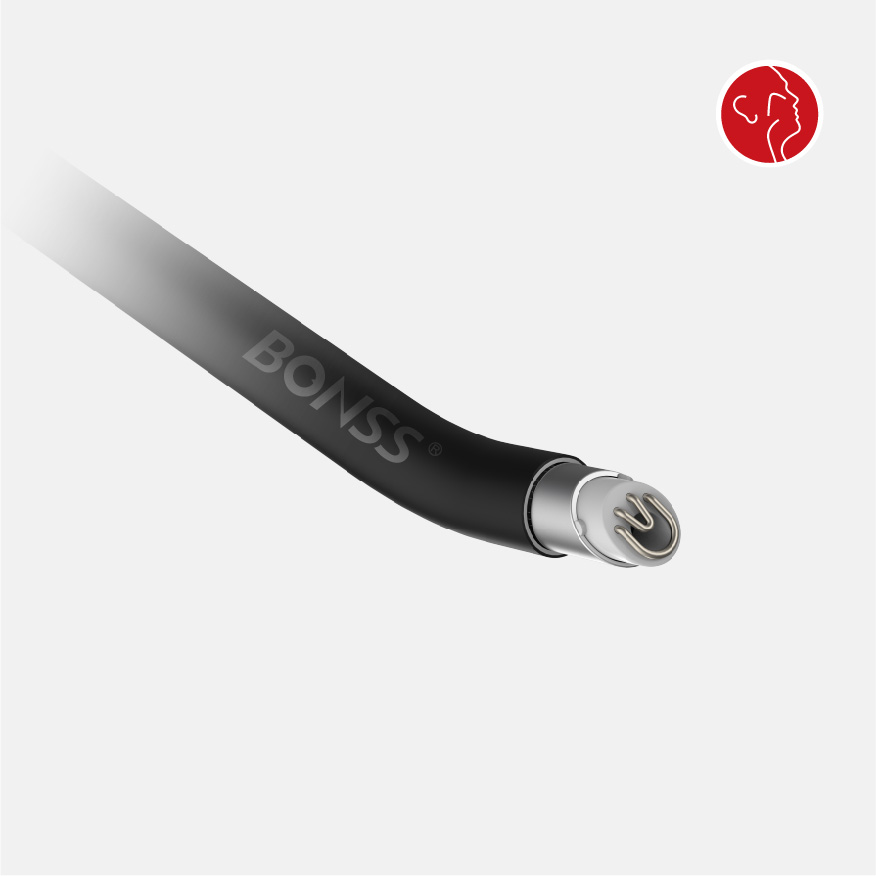
First, let’s clear up the basics so we’re all on the same page. An endoscopic cannula is that thin, hollow tube you feed through an endoscope’s working channel, right? It’s the delivery system for everything—biopsy forceps, laser fibers, even topical meds to control bleeding. A standard cannula is like a off-the-rack shirt: it fits most people (or most procedures) okay, but if you’re a tall guy or have a tricky body type, it rides up, gaps, or doesn’t work. For endoscopists, that “off” fit means added time in the procedure room—time that might matter for a patient with a bleeding ulcer or a small, hard-to-reach polyp. But customization isn’t just about making something fit better; it’s about solving specific, patient-specific problems that standard cannulas can’t touch.
Let me give you a real example I saw last year. A gastroenterologist in a small clinic out west reached out because he was dealing with a patient who had a stricture—narrowing—way lower in the esophagus than any standard cannula was built to reach. The standard 55cm cannula he had would only get him so far, and forcing it further risked tearing the stricture. His patient was a 72-year-old with a history of multiple prior procedures, so he didn’t want to risk another injury. He needed a cannula with a longer, reinforced shaft that was still flexible enough to navigate the tight curve of the lower esophagus, plus a slightly wider tip to gently dilate the stricture without slipping.
We didn’t have that in our catalog. So we sat down, talked through the exact specs with him, adjusted the design: 62cm length (we measured the exact distance he needed from the endoscope tip to the stricture), a nitinol-reinforced shaft (so it wouldn’t kink), and a tapered tip with a 1.8mm outer diameter (just tight enough to push gently but not cause trauma). We made a single prototype, shipped it to him in a week, and he called us that night saying it worked flawlessly—no more forcing, no more extra risk. That’s customization, plain and simple. It’s not about re-inventing the wheel; it’s about tweaking the wheel to fit that specific pothole (or in this case, that specific stricture) that standard tools can’t navigate.
But wait, is this even feasible from a manufacturing standpoint? I know some folks roll their eyes when they hear “custom” in medical devices—they think it’s expensive, takes forever, or only works for rare cases. Let me push back on that. Ten years ago, yes, custom cannulas were for 1% of cases, and you’d wait 6 weeks for a quote. But 3D printing and low-volume, precision manufacturing have changed everything now. We work with a network of small, specialized shops that can adjust every part of a cannula without locking us into huge bulk orders. Need a smaller inner diameter for a tiny biopsy forcep? Done. Need a hydrophilic coating on just the tip to make it slide easier through mucus? No problem. Need a colored ring near the base so you don’t mix it up with a standard cannula during a busy procedure? We add that. The key is that we don’t require 100 units to make a custom one—most of our orders for custom cannulas are 1 to 10 units, tailored to the specific patient or procedure.
Don’t get me wrong, it’s not for every case. If you’re doing a routine colonoscopy on a 35-year-old with no history of GI issues, a standard cannula works just fine. But when you’re dealing with a patient who’s had multiple procedures, has an unusual anatomy (like a very short esophagus or a stricture in a rare location), or needs a specialized procedure—like endoscopic submucosal dissection (ESD) for a large polyp where you need precise, gentle delivery of a cutting tool—custom is non-negotiable. I talk to surgeons and gastroenterologists all the time who say they’ve had to compromise because standard cannulas don’t fit their patient’s needs. That compromise means longer procedure times, higher risk of complications, and sometimes even having to abort a procedure halfway through. No one wants that.
Another thing I hear a lot: “Are custom cannulas safe?” That’s a fair question. All our custom cannulas go through the same FDA clearance (or CE marking, depending on where in the world we’re shipping) as our standard lines. We use medical-grade materials—silicone, medical-grade polyurethane, nitinol—all tested for biocompatibility. And every prototype gets validated by the doctor who requested it before we do a full production run. The last thing we want is a tool that causes more harm than good. Safety is non-negotiable, even when we’re building something from scratch for a specific patient.
Let’s switch gears to what this means for patients, because at the end of the day, that’s who this is all about. A few months ago, a 60-year-old patient with a very small, flat polyp in the upper stomach came in. The polyp was just 2mm, and the standard cannula’s tip was too bulky to get close enough to the polyp without brushing the surrounding healthy tissue. The endoscopist worked with us to make a custom cannula with a micro-tip—just 1.2mm outer diameter—so he could place the biopsy forceps exactly on the polyp without touching anything else. The procedure took half the time, the patient had minimal discomfort, and the biopsy results were perfect. That’s not just a “better tool”; that’s a better outcome for a real person.
I know some suppliers will tell you “we can’t do custom, it’s not cost-effective.” But here’s the thing: as a smaller, customer-focused supplier, cost-effectiveness for you (the clinic or hospital) is our top priority. We don’t mark up custom cannulas 10x like some big companies do—we price them based on the materials and manufacturing time, which is minimal for low-volume orders. And the time you save in the procedure room, the lower risk of complications, and the happier patients? That’s worth every penny, right?
If you’re a provider reading this, you probably have a story already. Maybe you’ve had a patient with an unusual anatomy that made standard tools useless. Maybe you’re planning a procedure that’s a bit off the beaten path, and you need a tool that’s not in your catalog. I’m here to tell you that you don’t have to settle. Endoscopic cannulas absolutely can be customized to patient needs—we’ve been doing it for years, and it’s not as complicated or expensive as you think.
So let’s cut through the noise. If you’ve got a case where standard cannulas just won’t work, reach out to us. We’ll walk through your needs, send you a quick prototype, make adjustments if needed, and get you the tool you need, fast. No hoops to jump through, no endless quotes, just real, practical solutions for real patients.
At the end of the day, medicine isn’t one-size-fits-all. Your tools shouldn’t be either. Let’s build something that works for you, and most importantly, works for your patients.
UBE Surgical Instrument Sets References:
- American Society for Gastrointestinal Endoscopy (ASGE). Technology and Endoscopy: Customization of Endoscopic Accessories. Gastrointestinal Endoscopy, 2022; 95(3): 456-462.
- European Society of Gastrointestinal Endoscopy (ESGE). Guidelines on Accessory Devices for Upper GI Endoscopy, 2021.
- Smith, A. et al. Low-Volume 3D-Printed Custom Cannulas for Complex Endoscopic Procedures. Journal of Endoscopic Surgery, 2023; 17(2): 112-118.
- International Organization for Standardization (ISO). ISO 10993: Biological Evaluation of Medical Devices, 2019.
Jiangsu Bonss Medical Technology Co., Ltd.
As one of the most professional endoscopic cannulas manufacturers and suppliers in China, we’re featured by quality products and good price. Please rest assured to buy bulk endoscopic cannulas for sale here from our factory. Customized orders are welcome.
Address: Building #7,No.898,China Medical City Avenue, Haling District, Taizhou City.Jiangsu P.R. China
E-mail: inquiry@plasma-surgical.com
WebSite: https://www.bonssmedical.com/
