Hey there, if you’re deep in the construction or metal fabrication game, you’ve probably stared at a blueprint and wondered: “Can a C purlin forming machine actually crank out high-quality C purlins that won’t let me down on a job site?” As a guy who’s been selling these machines for over a decade—repairing them, tweaking them, field-testing them in every kind of weather from Texas humidity to Canadian frost—let me cut through the noise and tell you the straight goods. No corporate jargon, no sales fluff, just what I’ve seen hold up over thousands of tons of steel. C Purlin Forming Machine

First off, let’s define “high-quality” here ‘cause that term gets thrown around like confetti at a hardware show. A good C purlin isn’t just a strip of steel bent into a C-shape. It needs to have consistent dimensions—your flange width, web height, and thickness can’t vary by more than a hair, otherwise it won’t line up with the trusses or wall panels you’re attaching it to. It needs to have a smooth, clean bend without any cracks or creases that’ll start rusting early under a roof or in a load-bearing wall. And most importantly, it has to hold up when you put weight on it—no warping, no bending under pressure when that warehouse or barn or agricultural building gets built.
Now, the question isn’t “Can some C purlin forming machine make good purlins?” It’s “Can a C purlin forming machine make high-quality ones consistently?” And the answer is yes—if you’re not cutting corners on the machine itself. Let’s break down what actually makes a machine deliver the goods, ‘cause I’ve seen too many guys buy the cheapest China-made machine on Alibaba, run it for a week, and end up with a pile of garbage they can’t use.
First, the roll forming design. This is the backbone of the machine, plain and simple. The rollers aren’t just cut shapes—they’re machined to exact tolerances, usually from high-grade steel like chrome-plated or tool steel, right? If the rollers are mismatched or worn down, you’ll get wavy flanges or a web that’s twisted every which way. I once had a customer in Oklahoma buy a cheap machine that used cast-iron rollers—after three months of running 24/7, the rollers wore so bad their purlins were 1/8 inch narrower on one end than the other. Total waste of material, and he had to stop a job to reorder. A good machine will have staggered roller stands, too—they guide the steel through the bend evenly, so you don’t get that “step” in the metal where it’s bent too sharp. That step is a stress point waiting to snap when you load the purlin, especially for heavy industrial projects.
Next, the feeding and cutting system. A lot of machines use a simple shear cut at the end, but that’s a mistake. If the shear is dull or misaligned, it’ll leave burrs on the cut end, and the purlin will be slightly longer or shorter than specified. A high-quality machine will have a flying shear or a hydraulic cut-to-length system that’s calibrated to within 0.5mm accuracy. I’ve seen machines with manual feeding, too—those are a no-go for consistent quality. Manual feeding means you’re guiding the steel by hand, so every purlin is a little off. Automated feeding with a coil cradle that keeps the steel straight, plus a leveler system that takes out any kinks from the coil, is non-negotiable. Kinks in the raw steel will turn into bends and weak points in the finished purlin, trust me.
Then there’s the material handling part. Wait, you might be thinking “that’s just moving metal, right?” But no—if your machine has a bad output table, the purlins will get bent as they come off the line, especially for longer lengths. A good machine has a powered output table with supports every few feet, so a 30-foot purlin doesn’t hang off the end and sag. I had a customer in Texas building a 100-foot barn—his old machine had a short output table, so every 30-foot purlin he made came off twisted, and he couldn’t use half of them. Switched to a machine with a full-length powered table, and his scrap rate dropped from 15% to less than 2%. That’s money in his pocket, right there.
But here’s the thing: even the best machine won’t make high-quality purlins if you don’t operate it right. I see this all the time—guys buy a top-tier machine, then run it at 100 feet per minute right out the gate, without adjusting the tension on the rollers. The steel stretches too much, and the dimensions go out of whack. Or they use the wrong speed for the thickness of the steel—if you’re running 16-gauge steel too fast, the bend will be sharp, not smooth, and you’ll get cracking. I always tell my customers: test the machine on a sample coil first. Cut 5 or 10 purlins, measure every dimension, check for bends or cracks, and adjust the roller tension and speed before you start a big job. That takes an extra hour, but it saves you from wasting tons of material and missing deadlines.
Another big factor: quality control built into the machine. Some modern machines have in-line measurement systems that check the web height, flange width, and thickness as the purlin is being made. If it’s off by more than the tolerance, the machine automatically stops, so you don’t have to sift through every purlin with a tape measure. That’s a game-changer for guys running high-volume production. I had a customer in Florida who does metal roofing for residential subdivisions—he was hiring two guys to measure every purlin, and it was eating into his profit. Switched to a machine with in-line QC, and he cut his labor costs by 30% while keeping his quality exactly where it needed to be.
Wait, let’s talk about common myths here, ‘cause I’ve heard them all. Myth #1: “A C purlin forming machine can only make good purlins if it’s super expensive.” Yeah, you get what you pay for, but that doesn’t mean you need to drop $100k on a machine for a small fabrication shop. There are mid-range machines that hit all the key points—good roller design, calibrated shear, solid output table—that will make high-quality purlins for most jobs: small warehouses, residential garages, agricultural buildings. Myth #2: “All steel is the same, so the machine doesn’t matter.” No way. If you use a low-grade steel with inconsistent thickness, even the best machine will make a purlin that’s weak. But a good machine will compensate a little—better rollers and tension adjustment can handle minor variations in steel thickness, whereas a cheap machine will just make a bad purlin.
Let me give you a real example that sticks with me. A few years back, I had a customer named Joe in Iowa. He runs a small metal fabrication shop, doing custom barns and small commercial buildings. He bought a cheap entry-level machine to save money, and for a while it worked—until he landed a big job for a 5,000-square-foot farm equipment storage building. The purlins he made had twisted webs, and when the contractor started putting the roof on, two purlins bent under the weight of the roof panels. Joe had to pay for all the material to redo those purlins, and he lost the trust of the contractor. He came to me, we sold him a mid-range machine with precision rollers and a hydraulic cut system, and now he’s that go-to guy for farm buildings in his area. He told me last year that his revenue tripled because he can deliver on time with zero bad parts.
So let’s circle back to the original question: Can a C purlin forming machine produce high-quality C purlins? The short answer is yes, but only if the machine is built with quality components, calibrated correctly, and operated properly. There’s no magic here—it’s about engineering that balances precision with durability, so every purlin that comes off the line is consistent, strong, and free of defects.
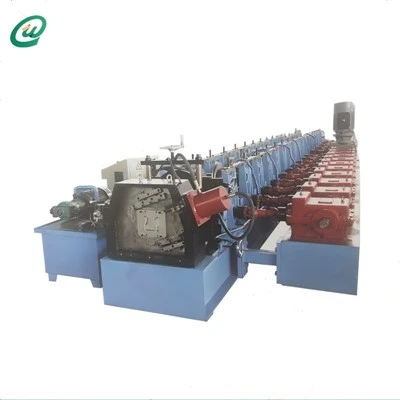
Now, if you’re in the market for a C purlin forming machine, don’t just go for the cheapest option. Ask the right questions: What are the rollers made of? What’s the tolerance on the cut system? Is there an output table that supports long purlins? And most importantly, ask for references. Any reputable supplier will let you talk to current customers to see what their experience is.
Cable Tray Roll Forming Machine If you’re tired of wasting material, missing deadlines, and dealing with purlins that don’t meet specs, let’s chat. I’ve helped hundreds of fabrication shops, contractors, and farm owners pick the right machine for their needs, and I can help you too. No pressure, no sales pitch—just honest advice from someone who’s been in the trenches with these machines for years.
References
- Metal Forming Magazine. "Roll Forming Best Practices for Structural Steel Products." 2022.
- American Institute of Steel Construction (AISC). "Specifications for Structural Steel Buildings." 2016.
- Fabricator Magazine. "Quality Control in Roll Forming: Key Factors for Consistent Parts." 2021.
- Construction Metal Products Association (CMPA). "Guidelines for Cold-Formed Steel Purlins." 2020.
- Roll Forming Technology Handbook. "Design and Operation of C Purlin Forming Lines." 2019.
Hanghzou IUWON Technology Co., Ltd.
Address: No.755, Xintangtou Village, Xinjie Street, Xiaoshan District, Hangzhou, Zhejiang
E-mail: sales@iuwon.com
WebSite: https://www.iuwonforming.com/
