Hey everyone, it’s [Your Name] here, and today we’re diving into something that’s been game-changing for tons of industries lately—neodymium magnets in magnetic encoders. If you’ve ever wondered how your car’s brake system knows when to adjust, or how a robot arm moves super precisely to pick up a tiny part, odds are a neodymium magnet and a magnetic encoder are working together behind the scenes. As a supplier specializing in different uses of neodymium magnets, I’ve talked to engineers, makers, and technicians from all over, and the number of times they mention these two working hand-in-hand is wild. Let’s break this down like we’re geeking out over a cool tech hack, no stuffy textbook jargon promise. Different Uses Of Neodymium Magnets
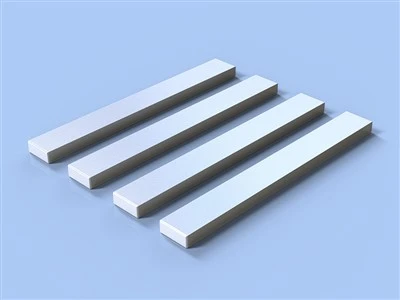
First, let’s keep it simple: a magnetic encoder’s whole job is to measure position, speed, or rotation—right, like telling a motor how fast it’s spinning, or where a valve should open. And neodymium magnets? They’re the strongest permanent magnets out there, way more compact than old ferrite or alnico magnets, so they’re perfect for packing into tight spaces where encoders are used. You might be thinking, “Wait, why not just use a regular magnet?” Nah, regular magnets can be weak, heavy, and they lose their pull if it’s even a little too hot or cold. Neodymium? We’re talking about magnets that hold their charge for decades, work in temps from like -40°F to 180°F (sometimes even higher if we get the right coating), and are tiny enough to fit in an encoder that’s smaller than a credit card. That’s why they’ve basically replaced other magnets for most encoder applications these days.
Let’s start with the most relatable use that most people don’t even notice: automotive stuff. If you own a modern car, truck, or even an electric vehicle (EV), there are magnetic encoder-neodymium magnet setups everywhere. Take the throttle pedal, for example. Back in the day, throttles used cables—super simple, but easy to wear out. Now, they’re “drive-by-wire,” so when you push the gas, a sensor reads how far the pedal moves, sends that signal to the engine, and adjusts power accordingly. Neodymium magnets are tiny little discs or rings inside the encoder attached to the pedal’s pivot; as the pedal moves, the magnet’s magnetic field changes, and the encoder picks that up to send the exact position signal. No contact, so no friction, which means way longer life than old potentiometers that would wear out after a few years. And for EVs? The motor itself uses these setups too. EV motors spin super fast—like 10,000 RPM or more—and you need to know exactly where the rotor is to keep power flowing smoothly. A neodymium magnet in the encoder gives super precise readings, so the motor doesn’t stutter, which helps with efficiency and battery life. I just talked to an auto parts engineer last month who told me they switched to our neodymium ring magnets for their encoder units because they used to get faulty signals when the car sat in direct sun (old magnets would demagnetize a tiny bit). Our coated neodymium units fixed that entirely. That’s the kind of real-world win I live for.
Next up, industrial automation—this is where most of my bulk orders go, honestly. Factories that build everything from phones to furniture use tons of robots, conveyor belts, and CNC machines. Let’s take a CNC mill, for example. When you’re cutting a metal part that needs to be exactly 0.001 inches thick, you can’t have the axis moving the wrong distance. Magnetic encoders with neodymium magnets mounted on the motor’s shaft track every tiny rotation of the axis. The magnet’s field is so stable even when the machine is vibrating nonstop (machines shake, right? Regular magnets would shift, but neodymium stays put). Another big one is robotic arms—those things that assemble electronics or pack boxes. The arm needs to move to exact coordinates, and each joint has an encoder with a neodymium magnet to track how much it’s bent or rotated. No contact between the encoder and the magnet means no wear, so the robot can run 24/7 without needing repairs. I had a guy from a packaging plant tell me they had their old encoder setups with ferrite magnets that would fail every 6 months, costing them thousands in downtime. Switched to our neodymium-based encoders two years ago, and he hasn’t had a single failure yet. That’s the kind of ROI that makes people come back, over and over.
Wait, let’s not forget about consumer electronics, because you probably use stuff with these every day too. Take a 3D printer—if you’ve ever printed a action figure, you know how important it is for the extruder to move in exact X, Y, Z directions. The stepper motor on a 3D printer has a neodymium magnet paired with a magnetic encoder to make sure each step is accurate. No skipping steps means no warped prints, which every maker hates. And what about gaming gear? A lot of high-end joysticks and racing wheels use these setups too—no contact means no dead zones, so your movement is super responsive. I’ve sold small neodymium disc magnets to a few maker groups that build custom 3D printers, and they say the difference in print quality from old potentiometer encoders is night and day. It’s cool to see these tiny magnets make such a big difference for hobbyists, not just big corporations.
Medical devices are another huge application, and this one hits different because lives depend on it. Think about MRI machines—wait, no, wait, not the big MRI magnets, the smaller ones inside the machine’s components. Surgical robots, like the da Vinci system, have tiny encoders with neodymium magnets that track the movement of the robotic instruments with sub-millimeter accuracy. If the instrument is off by even a little, it could hurt a patient, so precision is non-negotiable. The encoders have to be small, reliable, and not affected by metal in the room (since ORs have tons of metal tools), which neodymium magnets handle perfectly. I also supply magnets for insulin pumps—those small, portable pumps that deliver insulin need to adjust the flow of insulin super precisely, and the encoder that controls the pump’s piston uses a neodymium magnet to track how far it’s moved. No wear means the pump works for years without needing to be replaced, which is a big deal for people who rely on them. That’s when I realize, this isn’t just about selling magnets—it’s about helping people.
Now, let’s talk about why neodymium is the go-to here, compared to other magnets. Ferrite magnets are cheap, but they’re weak, so encoders have to be bigger to detect their field, which takes up space. Alnico magnets work, but they demagnetize easily if they get too hot, which is a problem for motors that run all day. Samarium cobalt is strong, but it’s super expensive, like way more than neodymium. Neodymium hits that perfect sweet spot: strong enough for tiny encoders, durable, affordable, and customizable in all kinds of shapes (rings, discs, arcs, even tiny custom shapes for niche encoders). We coat our neodymium magnets too—nickel, epoxy, gold, whatever you need—so they don’t corrode if they’re used in wet environments, like underwater pumps or outdoor farm equipment. That customization is huge; one of our clients makes encoders for agricultural tractors, and they needed a neodymium arc magnet that fit perfectly on a small shaft, so we machined it exactly to their specs, no extra bulk. That’s the “different uses of neodymium magnets” thing I talk about—we don’t just sell a magnet, we make one that fits what the encoder needs.
Wait, I should address a common question I get: are there any downsides? Yeah, neodymium magnets are brittle, so if you drop one, it can crack. But for encoder applications, they’re mounted safely, not getting banged around, so that’s rarely an issue. Also, they can interfere with other electronics if they’re not shielded, but encoder manufacturers use thin metal shields around the magnet to block that, so no problem. That’s something we help with too—we can add custom shielding to our neodymium magnets so they play nice with the rest of the encoder’s parts.
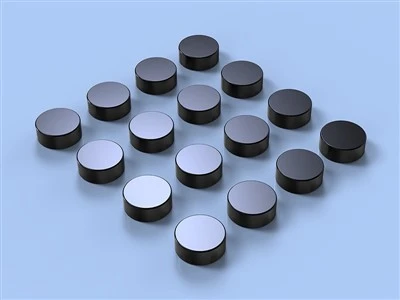
So, wrapping this up, magnetic encoders are everywhere, and neodymium magnets are the unsung hero making them work better, smaller, longer-lasting. From your car’s throttle to a surgical robot, from a factory robot to a 3D printer, these tiny magnets make precision possible without all the wear and tear of old contact-based systems. As someone who’s been in the neodymium magnet game for years, I’ve seen how these applications evolve—last year, we started getting more orders for encoders in e-bike motors, as more people switch to electric bikes, and that’s been exciting to be part of.
NdFeB Magnet If you’re an engineer, a manufacturer, a maker, anyone who works with encoders and needs strong, reliable neodymium magnets, we’ve got you. We make all kinds of shapes and sizes, can custom-coat or machine them, and we know how important consistency is—no faulty magnets that ruin a whole batch of parts. Whether you need a small disc for a consumer 3D printer or a large ring for an industrial motor, just reach out to talk through your needs. We’re here to help you find the right neodymium magnet for your magnetic encoder project.
References
- Neodymium Magnets: Properties and Applications in Industrial Automation, Magnetics Technology Center
- Magnetic Encoder Design and Performance: The Role of Permanent Magnets, IEEE Transactions on Industrial Electronics
- Automotive Sensor Technology: Drive-by-Wire Systems and Neodymium Magnet Integration, SAE International Journal of Passenger Cars – Mechanical Systems
- Medical Device Miniaturization: Magnetic Encoder and Neodymium Magnet Use Cases, Journal of Medical Engineering & Technology
- Neodymium Magnet Durability in Extreme Operating Conditions, National Institute of Standards and Technology (NIST)
Zhejiang Guomai Magnetic Material Technology Co., Ltd.
As one of the most professional neodymium magnets manufacturers and suppliers in China, we also support customized service. Please feel free to buy bulk high quality neodymium magnets made in China here from our factory. Welcome to contact us for pricelist.
Address: No.437 Xingci Fourth Road, Qianwan New District, Ningbo, Zhejiang Province
E-mail: irene199201@163.com
WebSite: https://www.gmmagnet.com/
