Hey there! I’m a supplier of HDPE Pipe Machines, and today I wanna chat about the raw materials needed for these machines. HDPE, which stands for High – Density Polyethylene, is a super popular material in the pipe – making industry. It’s got some great properties like high strength, durability, and resistance to corrosion, which makes it perfect for a whole bunch of applications. HDPE Pipe Machine
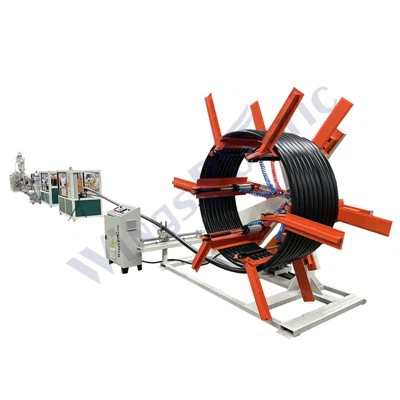
Let’s start with the main raw material, HDPE resin. This is the heart and soul of the HDPE pipe – making process. HDPE resin is made from ethylene monomers through a polymerization process. There are different grades of HDPE resin, and the choice of grade depends on the specific requirements of the pipes you’re making. For instance, if you’re looking to make pipes for water supply, you’ll want a grade that has excellent hygiene properties and is approved for contact with drinking water. On the other hand, if the pipes are for industrial use, you might need a grade with higher chemical resistance.
The quality of the HDPE resin matters a lot. Good – quality resin will result in pipes that are strong, have a smooth surface finish, and are less likely to develop cracks or leaks. When I source HDPE resin for my customers, I always look for suppliers who can provide consistent quality. I check things like the melt flow index (MFI) of the resin. A proper MFI ensures that the resin can be easily processed through the HDPE Pipe Machine. If the MFI is too high, the pipes might not have enough strength. If it’s too low, it can be difficult to extrude the resin through the machine.
Another important aspect of HDPE resin is its density. High – density HDPE resin is what we usually use for making pipes. It gives the pipes the strength and stiffness they need to withstand pressure and external forces. The density of HDPE resin typically ranges from about 0.941 to 0.965 g/cm³. This high – density characteristic allows the pipes to maintain their shape and integrity even under challenging conditions.
Apart from the HDPE resin, additives are also crucial. One common additive is carbon black. Carbon black is added to the HDPE resin mixture to provide UV resistance. When pipes are exposed to sunlight, the UV rays can degrade the HDPE over time, making it brittle and prone to cracking. Carbon black acts like a shield, absorbing and dissipating the UV energy, which extends the lifespan of the pipes. Usually, about 2 – 3% of carbon black is added to the resin mixture.
Antioxidants are another type of additive. They prevent the HDPE from oxidizing, especially during the manufacturing process and when the pipes are in use. Oxidation can cause the HDPE to break down, leading to a loss of mechanical properties. Antioxidants work by reacting with the free radicals that are formed during oxidation, thus stopping the chain reaction. There are different types of antioxidants available, and the choice depends on factors like the processing conditions of the HDPE Pipe Machine and the expected service environment of the pipes.
Plasticizers are sometimes added to the HDPE resin as well. Their main function is to increase the flexibility of the pipes. However, the use of plasticizers in HDPE pipes is not as common as in some other types of plastics, because HDPE already has a certain degree of flexibility on its own. But in some cases, where a little extra flexibility is needed, like for pipes that need to be bent during installation, a small amount of plasticizer can be added.
Lubricants are also an important part of the raw material mix. They help the resin flow more smoothly through the HDPE Pipe Machine. During the extrusion process, the resin needs to move through various parts of the machine, and friction can cause problems like overheating and uneven flow. Lubricants reduce this friction, ensuring that the pipes are produced with a consistent wall thickness and a good surface finish. There are different types of lubricants available, such as internal lubricants that work within the resin matrix and external lubricants that reduce the friction between the resin and the machine components.
Now, let’s talk about the quality control of these raw materials. As a supplier of HDPE Pipe Machines, I always emphasize the importance of quality control to my customers. Before the raw materials are used in the machine, they need to be thoroughly tested. For the HDPE resin, tests like density measurement, MFI testing, and mechanical property testing (such as tensile strength and impact resistance) are common. For the additives, things like purity and particle size need to be checked.
I also understand that the cost of these raw materials is a big concern for my customers. The price of HDPE resin can fluctuate depending on factors like the global oil market (since ethylene, the main component of HDPE, is derived from petroleum), supply and demand, and production costs. When there’s a shortage of raw materials in the market, the prices can go up, which can impact the profitability of pipe – making businesses. That’s why I always try to help my customers find the best – value raw materials without compromising on quality.
In addition to the raw materials themselves, the storage of these materials is also important. HDPE resin and additives should be stored in a dry and cool place. Moisture can affect the quality of the resin, causing problems during the extrusion process like bubble formation in the pipes. Also, additives like antioxidants and lubricants can lose their effectiveness if they’re stored in improper conditions.
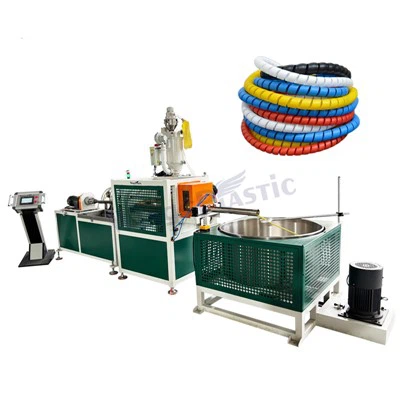
To sum it up, the raw materials for HDPE Pipe Machines are mainly HDPE resin, along with additives like carbon black, antioxidants, plasticizers, and lubricants. Each of these materials plays a crucial role in the production of high – quality HDPE pipes. As a supplier of HDPE Pipe Machines, I’m always here to help my customers understand the right combination of raw materials for their specific needs. If you’re in the business of making HDPE pipes or thinking about getting into it, and you have any questions about the raw materials or our HDPE Pipe Machines, don’t hesitate to reach out. We can have a great chat and figure out the best solutions for you.
PVC Hose Machine References:
- "Handbook of Polyolefins"
- "Plastics Extrusion Technology"
Qingdao Wings Plastic Technology Co., Ltd.
As one of the most experienced hdpe pipe machine manufacturers and suppliers in China, we also support customized service. Please feel free to buy durable hdpe pipe machine made in China here from our factory. For price consultation, contact us.
Address: C02 Of Anshengyi Road, No.2 Fuan Industry Zone,Jiaodong Town, Jiaozhou City, Qingdao City, Shandong Province,China
E-mail: kelly@wingsplastic.com
WebSite: https://www.wingsextruder.com/
