Hey there! I’m a supplier in the hoisting machinery business, and today I wanna chat about the control systems of hoisting machinery. It’s a topic that’s super important for anyone in the industry, whether you’re a buyer looking for the right equipment or just curious about how these machines work. Hoisting Machinery

Let’s start with the basics. Hoisting machinery is all about lifting and moving heavy loads. Think of cranes at construction sites, forklifts in warehouses, or elevators in buildings. These machines need a reliable control system to operate safely and efficiently.
Manual Control Systems
One of the oldest and simplest control systems is the manual control. You’ve probably seen operators using levers or pedals to control the movement of a hoist. This system gives the operator direct control over the machine. For example, in a small workshop, a manual chain hoist can be operated by pulling on a chain. The operator decides when to lift, lower, or move the load.
The advantage of manual control is its simplicity. There are no complex electronics or software to worry about. It’s easy to understand and operate, even for beginners. However, it also has its limitations. Manual control requires a lot of physical effort, especially when dealing with heavy loads. And the precision of movement is often limited by the operator’s skill.
Electrical Control Systems
As technology advanced, electrical control systems became more popular. These systems use electrical signals to control the movement of the hoisting machinery. They can be much more precise and efficient than manual control.
There are different types of electrical control systems. One common type is the relay control system. Relays are like switches that can be controlled by an electrical signal. In a hoisting machine, relays can be used to turn on and off motors, control the speed of the hoist, and perform other functions.
Another type is the programmable logic controller (PLC). A PLC is a computerized device that can be programmed to control the operation of the hoisting machinery. It can handle complex tasks and can be easily modified to suit different requirements. For example, in a large industrial crane, a PLC can be programmed to perform a series of movements automatically, such as lifting a load from one location and placing it in another.
Electrical control systems offer several advantages. They can provide precise control over the movement of the hoist, which is crucial for safety and efficiency. They also allow for automation, which can increase productivity and reduce the risk of human error. However, they can be more complex and expensive to install and maintain.
Hydraulic Control Systems
Hydraulic control systems are also widely used in hoisting machinery. These systems use hydraulic fluid to transmit power and control the movement of the machine.
In a hydraulic hoist, a pump is used to pressurize the hydraulic fluid. The pressurized fluid is then sent to cylinders or motors, which convert the hydraulic energy into mechanical energy to move the load. Hydraulic control systems can provide a lot of power, making them suitable for heavy-duty applications.
One of the main advantages of hydraulic control systems is their ability to handle large loads. They can provide smooth and precise movement, even under heavy loads. They are also relatively simple to maintain compared to some electrical systems. However, hydraulic systems can be prone to leaks, and the hydraulic fluid needs to be properly maintained to ensure the system’s reliability.
Remote Control Systems
In recent years, remote control systems have become increasingly popular in the hoisting machinery industry. These systems allow the operator to control the hoist from a distance using a wireless device, such as a remote control or a smartphone app.
Remote control systems offer several benefits. They can improve safety by allowing the operator to stand at a safe distance from the hoist. They also provide greater flexibility, as the operator can move around and control the hoist from different locations. For example, in a large construction site, an operator can use a remote control to operate a crane from a convenient location, rather than being tied to a control panel on the crane itself.
However, remote control systems also have some limitations. They rely on a wireless signal, which can be affected by interference or obstacles. And there is always a risk of the remote control being lost or damaged.
Safety Features in Control Systems
No matter what type of control system is used, safety is always a top priority in hoisting machinery. Control systems are designed with several safety features to prevent accidents and protect the operator and the equipment.
One common safety feature is the overload protection. This feature monitors the load being lifted and stops the hoist if the load exceeds a certain limit. It helps to prevent damage to the hoist and ensures the safety of the operator.
Another safety feature is the emergency stop button. This button can be pressed in case of an emergency to immediately stop the operation of the hoist. It’s a simple but effective way to prevent accidents.
In addition, many hoisting machines are equipped with sensors and alarms. These sensors can detect abnormal conditions, such as overheating or a malfunction in the control system, and trigger an alarm to alert the operator.
Choosing the Right Control System
When choosing a control system for hoisting machinery, there are several factors to consider. First, you need to consider the type of application. For example, if you’re using the hoist in a small workshop, a manual or simple electrical control system may be sufficient. But if you’re dealing with heavy loads in a large industrial setting, a more advanced hydraulic or PLC control system may be required.
You also need to consider the budget. Some control systems can be more expensive than others, both in terms of the initial cost and the maintenance cost. You need to find a balance between the cost and the performance of the control system.
Finally, you need to consider the safety features. Make sure the control system you choose has all the necessary safety features to protect the operator and the equipment.
Conclusion
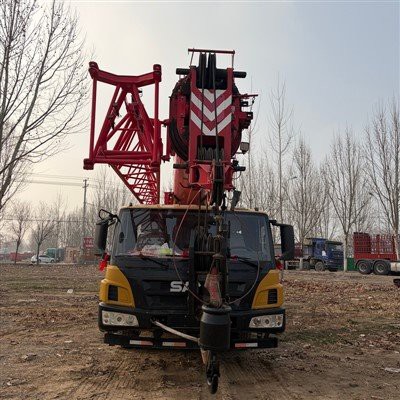
In conclusion, the control systems of hoisting machinery play a crucial role in the safe and efficient operation of these machines. There are different types of control systems available, each with its own advantages and limitations. As a hoisting machinery supplier, I understand the importance of choosing the right control system for your specific needs.
Second Hand Mixer Truck If you’re in the market for hoisting machinery and need help choosing the right control system, don’t hesitate to contact me. I’m here to provide you with the best advice and solutions. Let’s work together to find the perfect hoisting machinery for your business.
References
- "Hoisting Machinery Handbook" – A comprehensive guide on hoisting machinery and its control systems.
- Industry research reports on the latest trends in hoisting machinery control systems.
Liangshan Guanyue Auto Trading Co., Ltd.
As one of the leading hoisting machinery manufacturers and suppliers in China, we warmly welcome you to buy bulk high quality hoisting machinery at low price from our factory. If you have any enquiry about pricelist and quotation, please feel free to email us.
Address: Liangshan County, Jining City, Shandong Province
E-mail: guanyuetruck@gmail.com
WebSite: https://www.gytruck.com/
