Hey there! As a supplier of rigid endoscope parts, I often get asked about the size of the working channel in these parts. It’s a pretty important aspect, and I’m gonna break it down for you in this blog. Rigid Endoscope Parts

Let’s start with the basics. The working channel in a rigid endoscope is like a little passageway inside the endoscope. It’s there to let all sorts of tools pass through, like biopsy forceps, scissors, and other instruments that doctors use during procedures. The size of this channel can vary a whole lot, and it really depends on what the endoscope is gonna be used for.
For some simple diagnostic procedures, a smaller working channel might be just fine. A lot of the time, you’ll see channels with diameters around 2 – 3 millimeters. These are great for things like taking small tissue samples or just getting a good look at what’s going on inside the body. They’re not too big, so they don’t take up a ton of space in the endoscope, which means the overall size of the endoscope can be kept relatively small. This is super important, especially when you’re dealing with areas in the body that are a bit hard to reach.
But when it comes to more complex procedures, like surgeries, you’re gonna need a bigger working channel. We’re talking diameters of 4 – 6 millimeters or even more in some cases. With a larger channel, doctors can use bigger and more powerful instruments. For example, if they need to remove a large polyp or perform a more invasive operation, a wider working channel gives them the room they need to maneuver the tools effectively.
Now, you might be wondering why the size of the working channel matters so much. Well, it’s all about the functionality and the patient experience. A smaller channel might limit the types of tools that can be used, which could mean that some procedures take longer or are more difficult to perform. On the other hand, a larger channel can make things a lot easier for the doctor, but it also means the endoscope itself might be a bit bulkier. This could potentially cause more discomfort for the patient, especially if the endoscope has to be inserted into a sensitive area.
As a supplier, we have to make sure we offer a range of options when it comes to the size of the working channel. Different hospitals and medical facilities have different needs, depending on the types of procedures they perform. Some might focus more on diagnostic work, so they’ll be looking for endoscopes with smaller working channels. Others might do a lot of surgical procedures, and they’ll need the larger ones.
We also have to think about the quality of the working channel. It’s not just about the size; it also has to be smooth and well – made. If the inside of the channel is rough, it can cause problems for the instruments passing through. They might get stuck or damaged, which can lead to delays during a procedure and even affect the accuracy of the diagnosis or treatment.
Another thing to consider is the compatibility of the working channel with different instruments. We need to make sure that the size of the channel is compatible with the most commonly used tools in the medical field. This means working closely with instrument manufacturers to ensure that everything fits together properly.
When it comes to choosing the right size of the working channel for a particular endoscope, there are a few factors that doctors and medical professionals take into account. First of all, they look at the type of procedure they’ll be performing. As I mentioned earlier, diagnostic procedures usually require smaller channels, while surgical ones need larger ones.
They also consider the patient’s anatomy. Some patients might have smaller or more delicate areas in their bodies, and in those cases, a smaller endoscope with a smaller working channel might be more appropriate. This helps to minimize the risk of damage to the patient’s tissues.
Cost is also a factor. Larger working channels often mean more expensive endoscopes because they require more materials and more precise manufacturing. So, medical facilities have to balance the need for a larger channel with their budget.
As a supplier, we try to offer a good balance between quality and cost. We know that medical facilities are always looking for the best value for their money, and we want to make sure we can meet their needs.
So, if you’re in the market for rigid endoscope parts, and you’re trying to figure out what size working channel is right for you, don’t hesitate to reach out. We’ve got a team of experts who can help you make the right decision based on your specific needs. Whether you’re doing simple diagnostic work or complex surgeries, we’ve got the parts to fit the bill.
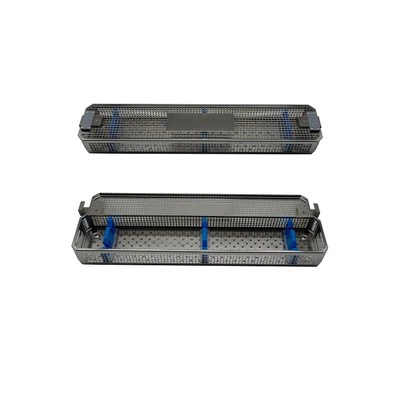
If you’re interested in learning more about our rigid endoscope parts or have any questions about the working channel sizes, just drop us a line. We’re here to help you find the perfect solution for your medical practice.
Medical Accessories References:
- Medical Endoscopy Textbooks
- Journals on Endoscopic Technology and Applications
- Industry Reports on Rigid Endoscope Manufacturing and Usage
Zhejiang Jiacheng Medical Instrument Co., Ltd.
We’re well-known as one of the leading rigid endoscope parts manufacturers and suppliers in China, specialized in providing high quality customized service to global clients. Please feel free to buy discount rigid endoscope parts from our factory. Contact us for more details.
Address: Building 8, Shutai · Fuchun Innovation Park, No. 516, Majia Road, Fengchuan Subdistrict, Tonglu County, Hangzhou, Zhejiang Province, China
E-mail: Ken.huangfu@jiachengmedical.com
WebSite: https://www.jiachengmedical.com/
