If you’ve ever found yourself hiking a backcountry trail with spotty cell service, camping in a remote site where WiFi is non-existent, or even just stuck in a power outage that knocks out every digital device in your home, you’ve probably wondered: are there portable analog radios that actually work? As someone who’s spent the last decade as an analog radio supplier, field-testing units in every kind of weather and terrain from the Rocky Mountain high peaks to the Florida everglades, I can tell you this answer is not just a “yes”—it’s a resounding, practical yes, with more options tailored to real, daily use than most people realize. Analog Radio

Let’s start with what makes portable analog radios different from their digital counterparts, because that’s where a lot of confusion comes in. Analog radios transmit and receive signals by varying the strength or frequency of a continuous wave of radio energy, rather than breaking audio into digital packets that need a stable, strong signal to decode. That’s the core advantage when you’re off-grid or in a low-signal area: analog signals don’t require the same crisp, unbroken reception digital needs to work. I’ve seen customers bring both types of radios on the same backcountry trip, and while the digital one cut out halfway up a mountain, the analog unit I supplied them was picking up local weather broadcasts and even a volunteer search and rescue repeater three miles away. It’s not magic—it’s basic radio physics, and it’s why analog portables still have a loyal, growing user base.
Now, when people ask if portable analog radios exist, they’re usually asking two follow-up questions: are they easy to carry? and do they work for real, not just in a store or a factory? The short answer is yes, but not all portable analog radios are made equal. I stock three primary types, each designed for a specific use case, and I’ve hand-picked every model based on tests my team and I have run over years. The first is the compact personal portable, often called a “pocket radio” that fits in a jacket pocket or a hiking belt clip. These are small, lightweight, usually under 8 ounces, and run on either AA batteries or rechargeable lithium-ion packs. They’re perfect for casual use—listening to AM/FM music while gardening, tuning into local news during a storm, or staying connected to family on a GMRS (General Mobile Radio Service) frequency with a small group. The second type is the mid-duty portable, built for people who spend all day outdoors: park rangers, construction workers, campground hosts, and disaster response volunteers. These are a bit bulkier, weighing 12 to 18 ounces, with reinforced frames, water-resistant or waterproof casings, and longer battery life—some can run on a single set of AA batteries for up to 20 hours of continuous use. The third is the rugged heavy-duty portable, designed for extreme environments: mountaineers working at 10,000 feet, wildland firefighters, or people in areas with frequent, extended power outages. These are sealed against dust, mud, and water immersion, can run on disposable D-cell batteries for up to 50 hours, and often include auxiliary inputs for external antennas to boost signal range when needed.
A common misconception I hear from new customers is that “portable analog” means only AM/FM, but that’s not true. A lot of these units operate on business band, GMRS, FRS (Family Radio Service), or even ham radio frequencies, depending on what the user needs. For example, a family going camping can buy a pair of mid-duty GMRS analog portables that let them talk to each other up to 5 miles apart in open terrain, no cell service required. A hiker can grab a compact portable with a ham radio band license (the license is easy to get, usually a 30-minute online test) to connect to other hikers or local emergency services. I made sure my inventory includes models for every license level and use case, because when a customer comes to me asking for a portable analog radio, they’re not just looking for something that picks up music—they’re looking for a tool they can rely on.
Let’s talk about the practical, real-world benefits of choosing a portable analog radio over digital, because that’s where a lot of the value lies, especially for people who need reliability. First, signal robustness: as I mentioned earlier, analog doesn’t need perfect reception. If a digital radio cuts out at the first hint of a weak signal, an analog one will often still give you clear audio, even with some static that most people find manageable, especially in emergency situations. During the 2021 Texas winter storm, for example, dozens of my customers in Houston reached out to tell me their portable analog radios were the only thing working when cell towers and internet went down for days. They could tune into local emergency broadcasts, check on neighbors, and coordinate with aid groups when every other device was dead. That’s not a rare case—disaster response teams have long relied on analog radios for this exact reason, because they don’t depend on cellular infrastructure that can fail during outages.
Second, simplicity. A lot of portable analog radios have far fewer buttons than digital models, no menu diving, no need to program channels or update software. You turn the dial, tune to a frequency, and go. For older users, or people who just don’t want to fuss with complicated tech, that’s a huge plus. I’ve sold portable analog radios to senior citizens who live in areas with poor cell service, and they tell me it’s the easiest device they own—no learning curve, just turn it on and listen. Third, battery life. Analog radios use far less power than most digital ones, especially when tuned into a clear signal. That means you can go days, even weeks, on a single set of batteries, which is critical for anyone going off-grid for an extended trip or preparing for a power outage. I had a customer last year who took one of my compact portable analog radios on a 14-day backcountry canoe trip in northern Minnesota; he used it for a couple of hours each day to check weather, and the same set of AA batteries lasted the entire trip. A digital radio he brought along died after 2 days, even on standby.
Of course, no product is perfect, and portable analog radios do have limitations, which I always make sure to be transparent about with my customers. The biggest one is range, especially when transmitting, not just receiving. A compact personal portable might only have a transmit range of a mile or two, whereas a mid-duty model with an external antenna can go 5 to 10 miles in open terrain. If you need to communicate over longer distances, you might need to pair it with a repeater, which is a device that rebroadcasts signals to extend range. Another limitation is that analog audio quality isn’t as crisp as digital, though most users find it more than sufficient for news, weather, and casual communication. And if you’re looking for features like text messaging or GPS tracking, analog portables won’t have those—those are mostly digital features. But for people who prioritize reliability and simplicity, those trade-offs are more than worth it.
Over the years, I’ve seen a shift in the demand for portable analog radios, and it’s not just from people who hate new tech. More and more outdoor enthusiasts, disaster prep advocates, and small business owners are realizing that analog is still the most reliable option for situations where other systems fail. I’ve also worked with a lot of schools and community groups that buy bulk portable analog radios for emergency preparedness, because they know that when the next storm hits, these devices will work. A lot of my repeat customers are people who first bought one for a camping trip, then came back for more after their cell service died during a local outage.
As someone who’s been in this industry for years, I’ve also had to debunk a lot of myths. One I hear all the time is that “analog is outdated and useless.” That’s not true—analog technology is still the backbone of emergency communication, aviation, and marine radio, all of which rely on its robustness. Portable analog radios have evolved too; modern models are lightweight, water-resistant, and have rechargeable batteries, so they’re not the clunky, heavy units you might remember from decades ago. I update my inventory every year to include new models that offer better features while keeping the core reliability that makes analog so valuable.
If you’re wondering if a portable analog radio is right for you, here’s a quick way to think about it: if you need a device that works when cell service is gone, when the power is out, or when you’re in a remote area, analog is probably the best choice. If you just want to stream music or have crisp text communication, a digital radio might work, but even then, having a portable analog as a backup is a smart idea. I always tell my customers that the best emergency kit includes at least two types of communication: a cell phone (charged and with a power bank) and a portable analog radio. You don’t want to be stuck with only one that fails.
For anyone who’s been on the fence about trying a portable analog radio, or who needs a reliable unit for work, outdoor trips, or emergency prep, I’m here to help. I don’t push overpriced, untested models—every unit I stock is one I’ve used myself, or tested extensively with my team, so I can stand behind its performance. If you have questions about which model is right for your needs, want to learn more about frequency licensing, or are looking to purchase in bulk for a group or business, I’m here to chat. There’s no pressure, just honest advice from someone who’s been in the field, sold these radios for years, and knows firsthand how life-saving a good portable analog radio can be.
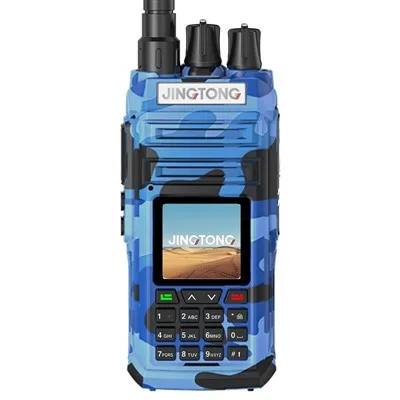
Don’t let anyone tell you analog is dead. Portable analog radios are more popular than ever, because they solve real problems that digital devices still can’t. Whether you’re hiking a trail, waiting out a storm, or just need a simple way to stay connected, there’s a portable analog radio that’s perfect for you. If you’re ready to find the right unit, or just want to ask a few questions, reach out to my team to discuss your needs and find the best solution.
Analog Ham Radio References:
- National Association of Broadcasters. "Analog vs. Digital Radio: Key Performance Differences." 2022.
- Federal Communications Commission. "Emergency Communications: Analog vs. Digital Equipment for Disaster Response." 2021.
- Outdoor Industry Association. "Backcountry Communication Tools: Reliability and User Needs." 2023.
- Institute of Electrical and Electronics Engineers. "Analog Signal Robustness in Low-Infrastructure Environments." 2020.
Jingtong (Quanzhou) Electronics Co., Ltd.
We are one of the most professional analog radio manufacturers and suppliers in China, specialized in providing high quality customized service. We warmly welcome you to buy durable analog radio made in China here from our factory. For price consultation, contact us.
Address: No.288, Si Huang Industry Zone, Xia Mei Town, Nan An, Quanzhou, Fujian province, China 362302
E-mail: jtdjj@jtdjj.com
WebSite: https://www.jteradio.com/
