As someone who’s spent the last decade working hands-on in PCB assembly—first on the shop floor soldering through-hole components, then moving to customer success, and now leading supplier evaluations for my own manufacturing facility—I’ve seen way too many engineering teams cut corners when vetting a new PCB assembly service provider. A bad choice doesn’t just delay a product launch; it can waste six months of prototyping, burn through budget on reworks, and even damage brand reputation if a finished device fails in the field. Last year, I worked with a startup that lost $200k in a critical automotive sensor line because their unvetted assembly provider mixed leaded and lead-free solder on a batch, a mistake that could’ve been caught with proper quality checks. PCB Assembly

If you’re an engineer, procurement manager, or product lead tasked with picking an assembly partner, this isn’t a choice you make based on Google reviews or the lowest quote. Over the years, I’ve honed a framework of practical, actionable checks that cut through sales fluff and actually reveal whether a provider can deliver consistent, reliable results. Let’s walk through what to prioritize, step by step.
First, start with hard, verifiable quality credentials, and don’t just take their word for their certifications. I’ve sat in on sales pitches where providers brag about ISO 9001 and IPC standards, only to find they only do so for 60% of their operations and outsource the rest to unvetted third parties. The IPC-A-610 standard, for example, is the global benchmark for acceptable electronic assembly quality, and IPC-J-STD-004 covers solderability. A reputable provider will have their shop floor audited regularly by IPC-certified personnel, and they should be able to share their most recent audit reports without pushing back—any hesitation is a red flag.
Even more specific to quality is their defect rate data. Ask for their in-line first-pass yield (FPY) for similar projects to yours. If you’re assembling a high-mix, low-volume prototyping run, a provider with 95% FPY for that profile is a far better fit than one that touts 99% FPY only for high-volume, single-type products. Last quarter, we had a client with a medical device prototype that kept failing functional tests, and the root cause was a provider that hid a 12% first-pass defect rate for small-pitch SMD components. A legitimate provider will have their defect log system—usually a digital tool like MES (Manufacturing Execution System) software—to track every error, from misaligned resistors to solder bridges, and they should be able to share a trend report over the last six months to show they’re not spiraling in defects.
Next, dive into their technical capabilities, and match them to your project’s specific needs. This isn’t about whether they can do basic through-hole assembly—it’s about whether they can handle the unique nuances of your design. For example, if your board uses fine-pitch components (0.4mm or smaller QFPs), 0201 or 01005 chip resistors, or flexible rigid-flex substrates, you need to verify they have the right equipment and certified technicians, not just claim they “specialize.” I once saw a provider advertise flex assembly as a core service, but their reflow ovens didn’t have the precise temperature profiling needed to prevent flex board delamination—costing the client $50k in replacement boards.
Another critical technical check is their design for manufacturability (DFM) review process. A good assembly provider should offer free, detailed DFM feedback before you even send the first prototype—this is where they spot flaws like component placement spacing that will cause solder bridges, or thermal pad sizes that lead to insufficient soldering. Ask for a sample DFM report from a recent project similar to yours, and see if their feedback was specific (e.g., “Change the 0201 resistor footprint to a 0402 for better yield on our pick-and-place machine”) or generic (e.g., “Your design is fine”). If their DFM team is only flagging basic errors like missing component numbers, they’re not adding value—they’re just checking a box.
Then there’s supply chain reliability, a factor that’s only grown more urgent since the 2020 chip shortage. A great assembly provider is only as good as their ability to source parts on time, without compromising quality. Ask about their component sourcing strategy: do they have direct partnerships with authorized distributors, or do they use brokers that sell counterfeit parts? Counterfeit components are a huge risk—last year, a client’s industrial control line failed because their provider used uncertified resistors from a grey market distributor, leading to product recalls.
Also, inquire about their part lead times and inventory levels for common components. If your project needs a rare microcontroller, do they have a backup supplier, or will they make you wait 12 weeks? For critical components, a reliable provider will have a “part substitution” process that flags equivalent, authorized parts before production, so you don’t get stuck waiting. We keep 30 days of inventory for our most common high-demand components specifically to avoid delays, and we share that inventory list with clients for their peace of mind.
Cost is obviously a factor, but the lowest quote is almost never the best value. I’ve seen clients chase a 20% lower quote, only to pay 30% more in rework and delay fees. Instead, ask for a detailed, line-item quote that breaks down costs: component sourcing, setup fees, rework fees, test fees, and any additional services like conformal coating or functional testing. For example, one provider might quote $0.50 per board but charge $2 per hour for rework, while another quotes $0.75 per board and includes rework for free. Compare the total cost for a full run, not just per-board pricing.
Also, watch for hidden fees. Some providers charge extra for prototype runs, or for handling small batches, or for rushing orders. A reputable provider will be transparent about all costs upfront, and they won’t add surprise fees after you’ve agreed to work together. We always provide a fixed-price quote for prototyping, so there are no unexpected costs, which has built us long-term trust with our clients.
Finally, test their customer service and communication, which is often the make-or-break factor for long-term partnerships. PCB assembly projects have tight timelines, and miscommunication can lead to huge delays. During your initial conversations, notice how responsive they are: do they return calls or emails within 24 hours, or do they take 3-5 days to reply? Do they assign a single project manager to you, or do you have to deal with a rotating team of salespeople and techs? When you ask a technical question, do they give you a clear, specific answer, or do they give you a vague line like “we can handle that”?
A great assembly provider will also share progress updates regularly—whether it’s photos of the boards in production, test results, or delays. We send weekly photo updates for every project, and we have a dedicated project manager who is the single point of contact for every client, so they always know what’s going on. If a provider is vague or evasive during the vetting process, that’s a sign of how they’ll communicate when you’re waiting on a critical order.
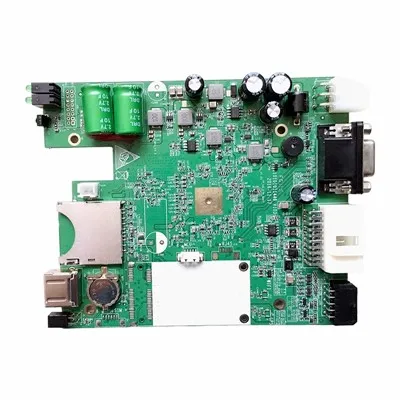
At the end of the day, the best PCB assembly provider isn’t the one with the flashiest website or the lowest quote—it’s the one that aligns with your project’s needs, has proven quality, reliable supply chains, and transparent communication. If you’re looking for a partner that can deliver consistent, high-quality PCB assembly, feel free to reach out to discuss your project requirements.
Quick Turn PCB Assembly References
IPC-A-610: Acceptability of Assemblies, Association Connecting Electronics Industries, 2022.
J-STD-004: Requirements for Soldering Fluxes, Association Connecting Electronics Industries, 2021.
Manufacturing Execution Systems (MES) Standards, International Society of Automation, 2020.
Counterfeit Electronic Parts Avoidance, U.S. Department of Defense, 2019.
Huaswin Electronics Technology Co., Ltd.
Address: Building A2, Hao Hai Hong Industrial Park, No.3 Yu He Road, Gong He, Sha Jing, Bao An, Shenzhen
E-mail: sales@huaswin.com
WebSite: https://www.huaswin-pcba.com/
