If you’ve ever sourced outdoor fabric for patio furniture, shade sails, or commercial awnings, you’ve likely heard of Textilene. As a Textilene fabric supplier, I get asked this question at least once a week: Can Textilene fabrics be dyed? The short answer is yes, but like any specialized textile, it’s not as simple as grabbing a box of fabric dye from the craft store and going to work. Over the 12 years I’ve been in this business, I’ve seen customers get frustrated with uneven fading, color that washes out after one rain, or dye that never bonds at all, and a lot of that comes from not understanding what Textilene is made of, how it’s processed, and what dye methods actually work for this unique material. Today, I want to break that down, share what I’ve learned from working with textile chemists, and give you the real deal on dyeing Textilene—because when you choose the right approach, Textilene can hold color better than almost any other outdoor fabric on the market. Textilene Fabrics
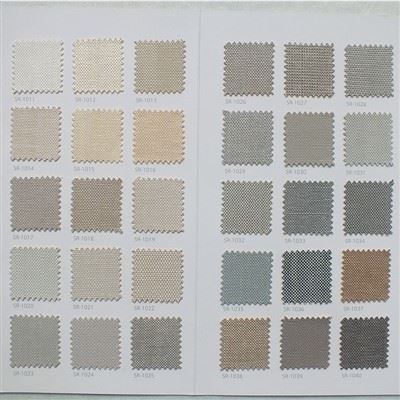
First, let’s start with the basics: what is Textilene fabric, exactly? For anyone new to the term, Textilene isn’t a random blend of fibers—it’s a branded, woven fabric that’s almost always constructed from a polyvinyl chloride (PVC) coating applied to a polyester base weave. Wait, that’s a two-layer system, right? The core is strong, flexible polyester yarn, usually high-tenacity polyester, woven to give the fabric tensile strength, resistance to tearing, and the ability to hold its shape under tension. The outer layer is a thin (but durable) PVC coating that’s what makes Textilene waterproof, UV-resistant, and resistant to mold, mildew, and stains. That PVC layer is key here—because that’s the part of the fabric that determines how dye interacts with it, unlike regular polyester fabrics that have no PVC coating.
A lot of people mix up Textilene with standard polyester or even acrylic outdoor fabrics, and that’s where the dyeing mistakes start. Acrylic takes well to acid dyes, for example, and regular polyester works with disperse dyes, but PVC is a plasticized polymer, which is a whole different beast. Dyeing any plastic material requires the dye to bond to the polymer chains, not just sit on the surface, and PVC is notoriously tricky because of its molecular structure: it’s dense, non-porous compared to polyester, and the plasticizers added to make PVC flexible can interfere with dye bonding if not managed correctly.
So, back to the original question: Can you dye Textilene? The short answer is that it depends on which part of the Textilene you’re trying to color. If you’re working with the base polyester weave before it’s coated with PVC, that’s much easier—standard disperse dye processes work here, just like with any woven polyester. But almost all commercial Textilene fabrics are dyed during manufacturing, before or after the PVC coating is applied, not after the fabric is cut and sewn into finished goods. That’s a critical point for anyone looking to dye existing Textilene products, not raw fabric: post-manufacturing dyeing is way harder, and most DIY methods won’t work, for a few reasons.
Let’s split this into two scenarios: dyeing raw Textilene fabric (as a supplier would process it) and dyeing finished Textilene products (like old patio cushions or awnings) that already exist. That way, if you’re a designer working on a custom project, or a homeowner who wants to refresh a faded awning, you’ll know exactly what’s possible.
First, manufacturing dyeing for raw Textilene, which is what we do at our facility. For the base polyester yarn, we use high-temperature disperse dyeing at 130-140°C, which is the standard for polyester fabrics. The dye molecules are small enough to penetrate the polyester’s molecular chains, and when heated under pressure, they bond permanently, meaning the color won’t wash out or fade as quickly. But then we add the PVC coating. For the PVC layer, we can’t use the same disperse dyes—PVC is hydrophobic, and disperse dyes won’t bond to it well. So for the final Textilene product, we usually use a process called “pigment loading” or “dye incorporation” during the PVC compounding stage: we mix color pigments directly into the PVC resin before it’s coated onto the polyester weave. This is the method that gives Textilene its characteristic fade resistance—those pigments are trapped inside the PVC layer, so they don’t rub off, and the PVC itself is formulated to resist UV degradation that would make other outdoor fabrics fade.
Wait, but is there another method for dyeing the PVC layer after coating? Some specialty textile labs use reactive dyes designed for plasticized polymers, but it’s not common for standard Textilene because it’s more expensive and can compromise the fabric’s flexibility. Pigment loading is the industry standard because it’s cost-effective, gives uniform color, and preserves Textilene’s key properties: water resistance, UV stability, and tear strength. That’s why when you see Textilene in 50+ colors at our supplier catalog, those colors are all embedded in the PVC layer, not just printed on top.
Now, the big question most customers ask: Can I dye an existing faded Textilene awning or patio cushion at home? I get this all the time—someone has a 3-year-old Textilene cushion that’s faded from sun exposure, and they want to re-dye it to match new furniture. The honest answer is: it’s possible, but it’s not easy, and you might not get the results you want. Let’s break down why. First, the PVC layer on Textilene is non-porous, so regular fabric dyes (like Rit or Jacquard acid dyes) won’t penetrate it. They’ll just sit on the surface, and after a few heavy rains or a trip through the washing machine, they’ll wash off. Second, most DIY dye kits are designed for natural fibers (cotton, linen) or standard polyester, not PVC. There are specialty plastic dyes, but they’re hard to find for home use, require high heat that can warp or melt Textilene fabric, and often leave a sticky residue that attracts dirt. I’ve had several customers send photos of their DIY dyed Textilene cushions that look splotchy, or have a sticky feel, because the dye didn’t bond properly to the PVC.
That said, there is a way to refresh faded Textilene, if you don’t want to replace it. We actually offer a color renewal service for customers who have existing Textilene products that have faded—we use a specialized process that applies a UV-stabilized, flexible pigment coating that bonds to the PVC layer without altering the fabric’s feel or performance. It’s not the same as re-dyeing, but it’s a cost-effective alternative to replacing the whole awning or cushions, and it lasts 5-7 years, depending on sun exposure. That’s a good middle ground for anyone who wants to keep their existing Textilene products, and it’s way better than DIY dyeing.
Another common misconception I hear is that Textilene can’t be dyed because it’s “waterproof.” That’s not true—waterproofness is a function of the PVC coating, not the ability of the fabric to take color. The problem is that the PVC coating is what makes it water-resistant, so it’s not as porous as non-coated fabrics. If you have a non-coated polyester fabric, it’s easier to dye, but it won’t have the outdoor durability that makes Textilene popular. So there’s a trade-off, and that’s something I always make sure customers understand: Textilene’s performance benefits (waterproof, UV-resistant, mold-resistant) come from that PVC coating, and dyeing it has to work with that coating, not against it.
Let’s talk about quality, too, because that’s what matters most to anyone using Textilene for commercial projects. As a supplier, I stand behind our dyed Textilene because we use high-quality pigments that are lightfast to AATCC Test Method 16, which means they’ll only fade by 1 on the grayscale (a scale where 5 is no fading) after 100 hours of UV exposure. That’s the standard for outdoor fabrics, and it’s way better than most other outdoor textiles. When we see cheaply dyed Textilene on the market, that’s usually because the manufacturer cut corners by using lower-quality pigments or not mixing them evenly into the PVC, so the color fades in a year or two. That’s why sourcing from a reputable supplier matters—we test every batch of dyed Textilene to make sure the color is uniform, the PVC coating is flexible, and the pigments won’t wash out or fade prematurely.
What about custom dyed Textilene? A lot of interior designers and commercial architects come to us wanting Textilene in a specific Pantone color for a patio project, a restaurant awning, or a hotel lounge. Can we do that? Absolutely, as long as it’s a color that works with our manufacturing process. We use custom pigment mixes for bulk orders, usually minimum 500 linear yards, so if you have a small project, we can direct you to pre-existing stock colors that are the closest match. For larger commercial projects, custom dyeing Textilene is not only possible, it’s a common practice—we’ve done custom colors for resorts, stadiums, and even coastal infrastructure projects, because Textilene holds up to salt air and sun way better than other fabrics, and custom colors let designers create cohesive brand identities for outdoor spaces.
I should also address a common mistake that new Textilene users make: washing it with harsh detergents or bleach. That can break down the PVC layer and fade the underlying pigments, making the fabric look dull even if it was properly dyed. We always recommend using mild, pH-neutral detergents to clean Textilene, and avoiding bleach, because bleach can react with the PVC and cause discoloration, not just fade the color. That’s another tip that prevents people from thinking their Textilene is impossible to dye or fix, when actually it’s just being cleaned incorrectly.
Now, if you’re still wondering about dyeing vs. pigment loading, let’s clarify that once and for all. Dye molecules are designed to bond with the molecular structure of the fiber, so the color is part of the fiber itself. Pigments are tiny particles that are trapped in the material (in this case, the PVC coating) to give it color. For Textilene, pigment loading is the far more practical method because it gives better UV resistance, doesn’t damage the fabric’s fibers, and is more durable for outdoor use. Dyeing Textilene would require the dye to penetrate the non-porous PVC, which is difficult and not as long-lasting, so pigment loading is the standard for the industry.
At the end of the day, the answer to “Can Textilene fabrics be dyed?” is nuanced, which is why so many people get confused. If you’re talking about raw Textilene fabric being dyed during manufacturing, yes, absolutely, with pigment loading into the PVC layer, and that’s how all high-quality Textilene is colored. If you’re talking about dyeing an existing finished Textilene product at home, no, standard DIY methods won’t work, but there are professional services to refresh faded color. If you’re looking for custom Textilene colors for a project, you can work with a reputable supplier to get exactly the hue you need, as long as it fits their minimum order requirements.

As a Textilene supplier, my number one goal is to make sure my customers have the right information, so they don’t waste time or money on dyeing methods that won’t work, or buying low-quality Textilene that fades quickly. Whether you’re an architect planning a commercial patio, a homeowner replacing old outdoor cushions, or a designer looking for custom outdoor fabric for a project, Textilene is a great choice, and it can be colored to fit your needs—you just have to know how it works.
Textilene Fabrics If you’re ready to source Textilene fabric for your next project, or have questions about custom colors, durability, or any other details, feel free to reach out to our team to discuss your requirements. We work with residential clients, commercial businesses, and designers of all sizes, and we can help you find the perfect Textilene solution that meets your needs for color, performance, and budget.
References
- Textile Institute. (2020). Outdoor Textiles: Properties, Performance, and Applications. Woodhead Publishing.
- Holliday, L. (1979). PVC Technology and Applications. Applied Science Publishers.
- American Association of Textile Chemists and Colorists. (2021). Test Method 16: Color Fastness to Light of Textiles. AATCC.
- Mclaren, K. (2006). Textile Dyeing and Coloration. Society of Dyers and Colourists.
Nanping Kingway New Material Co., Ltd.
As one of the most professional textilene fabrics manufacturers and suppliers in China, we also support customized service. With abundant experience, we warmly welcome you to wholesale durable textilene fabrics in stock here from our factory. If you have any enquiry about pricelist, please feel free to email us.
Address: No. 10, Chengnan Branch Road, Chengjiao Town, Nanping, Fujian, China.
E-mail: npjwxcl@aliyun.com
WebSite: https://www.suernew.com/
