Hey there! I’m a supplier of swivel points, and I’ve been in this game for a while. One question that I get asked a lot is, "What are the movement accuracy requirements for swivel points?" Well, let’s dive right into it. Swivel Point
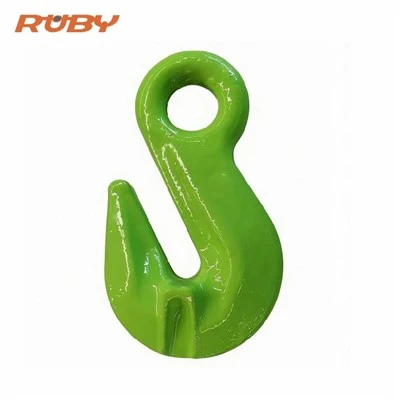
First off, what exactly are swivel points? Swivel points are components that allow for rotational movement in various mechanical systems. They’re used in a ton of different applications, from industrial machinery to automotive parts, and even in some consumer products like furniture. The movement accuracy of these swivel points is crucial because it can directly impact the performance and safety of the entire system they’re a part of.
Why Movement Accuracy Matters
Let’s talk about why movement accuracy is such a big deal. In industrial settings, for example, swivel points are often used in heavy – duty machinery. If the swivel point doesn’t move accurately, it can lead to misalignment of parts. This misalignment can cause excessive wear and tear on the machinery, leading to breakdowns and costly repairs. In some cases, it can even pose a safety hazard to the workers operating the equipment.
In the automotive industry, swivel points are used in steering and suspension systems. A lack of movement accuracy here can affect the handling of the vehicle. You don’t want your car to veer off to one side or have a loose steering feel, right? That’s why car manufacturers have very strict requirements for the movement accuracy of swivel points used in their vehicles.
Factors Affecting Movement Accuracy
There are several factors that can affect the movement accuracy of swivel points. One of the most important ones is the manufacturing process. The precision with which the swivel point is machined plays a huge role. If the parts aren’t machined to the right tolerances, the movement won’t be accurate. For example, if the hole where the swivel pin goes is too big or too small, it can cause the swivel point to wobble or not rotate smoothly.
The materials used also matter. High – quality materials are more likely to provide better movement accuracy. For instance, using a strong and durable metal for the swivel pin and a well – lubricated bearing surface can reduce friction and ensure a more precise movement. On the other hand, using cheap or low – quality materials can lead to premature wear and a decrease in movement accuracy over time.
Another factor is the design of the swivel point. A well – designed swivel point will take into account the forces that will be acting on it during operation. For example, if a swivel point is going to be subjected to heavy loads, it needs to be designed in such a way that it can distribute those loads evenly. Otherwise, the uneven stress can cause deformation and affect the movement accuracy.
Specific Movement Accuracy Requirements
Now, let’s get into the nitty – gritty of the movement accuracy requirements. There are a few key metrics that are commonly used to measure the movement accuracy of swivel points.
Angular Accuracy
Angular accuracy refers to how precisely the swivel point can rotate to a specific angle. In many applications, especially those in the aerospace and robotics industries, very high angular accuracy is required. For example, in a robotic arm, the swivel points need to be able to rotate to exact angles so that the arm can perform its tasks accurately. A deviation of even a fraction of a degree can cause the robotic arm to miss its target.
Repeatability
Repeatability is another important requirement. It measures how consistently the swivel point can return to the same position after multiple rotations. In manufacturing processes where the same operation needs to be repeated over and over again, high repeatability is essential. For example, in a CNC (Computer Numerical Control) machine, the swivel points in the tool – changing mechanism need to be highly repeatable so that the correct tool can be selected every time.
Radial and Axial Clearance
Radial and axial clearance are also critical. Radial clearance refers to the amount of play or looseness in the swivel point in the radial direction (perpendicular to the axis of rotation). Axial clearance is the play in the axial direction (along the axis of rotation). Too much clearance can lead to inaccurate movement, while too little clearance can cause excessive friction and wear. The ideal amount of clearance depends on the specific application of the swivel point.
Meeting the Requirements
As a swivel point supplier, I understand the importance of meeting these movement accuracy requirements. That’s why we have a strict quality control process in place. Our manufacturing facilities are equipped with state – of – the – art machinery that allows us to machine the swivel points to very tight tolerances. We also use high – quality materials sourced from reliable suppliers.
Before we ship out any swivel points, we conduct thorough testing. We use advanced measuring equipment to check the angular accuracy, repeatability, and clearance of each swivel point. If a swivel point doesn’t meet our quality standards, it doesn’t leave our facility.
Working with Customers
We also work closely with our customers to understand their specific requirements. Every application is different, and what might be an acceptable level of movement accuracy for one customer might not be enough for another. We take the time to listen to our customers’ needs and then recommend the best swivel point solutions for them.
If a customer has a unique application that requires a custom – made swivel point, we’re more than happy to help. Our engineering team has the expertise to design and manufacture swivel points that meet the most demanding movement accuracy requirements.
Conclusion
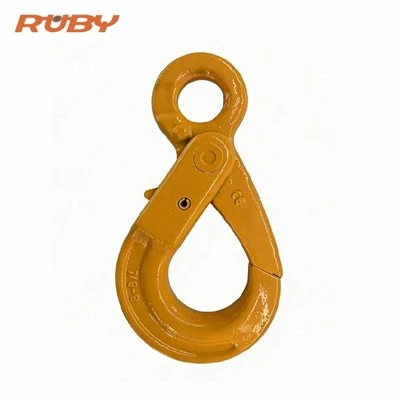
In conclusion, the movement accuracy requirements for swivel points are crucial for the performance, safety, and reliability of the systems they’re used in. Whether it’s in industrial machinery, automotive parts, or consumer products, accurate movement of swivel points is essential. As a swivel point supplier, we’re committed to providing high – quality swivel points that meet or exceed these requirements.
Lifting Components If you’re in the market for swivel points and have questions about movement accuracy or any other aspect of our products, don’t hesitate to reach out. We’re here to help you find the perfect swivel point solutions for your needs. Let’s start a conversation and see how we can work together to make your projects a success.
References
- Machinery’s Handbook: A comprehensive reference for mechanical engineers and manufacturers, which provides detailed information on machining tolerances and mechanical design.
- Automotive Engineering Textbooks: These textbooks offer insights into the requirements for automotive components, including swivel points in steering and suspension systems.
- Industry Standards and Guidelines: Various industry – specific standards and guidelines set by organizations such as ISO (International Organization for Standardization) provide requirements for the performance and accuracy of mechanical components like swivel points.
Hangzhou Ruby Imp. & Exp. Co., Ltd.
As one of the most experienced swivel point manufacturers and suppliers in China, we offer a wide range of products with superior quality. We warmly welcome you to wholesale custom made swivel point at competitive price from our factory.
Address: Taoyuan Industrial Park, Puyang Town, Xiaoshan, Hangzhou, Zhejiang, China.
E-mail: Sales5@z2lifting.com
WebSite: https://www.rubylifting.com/
